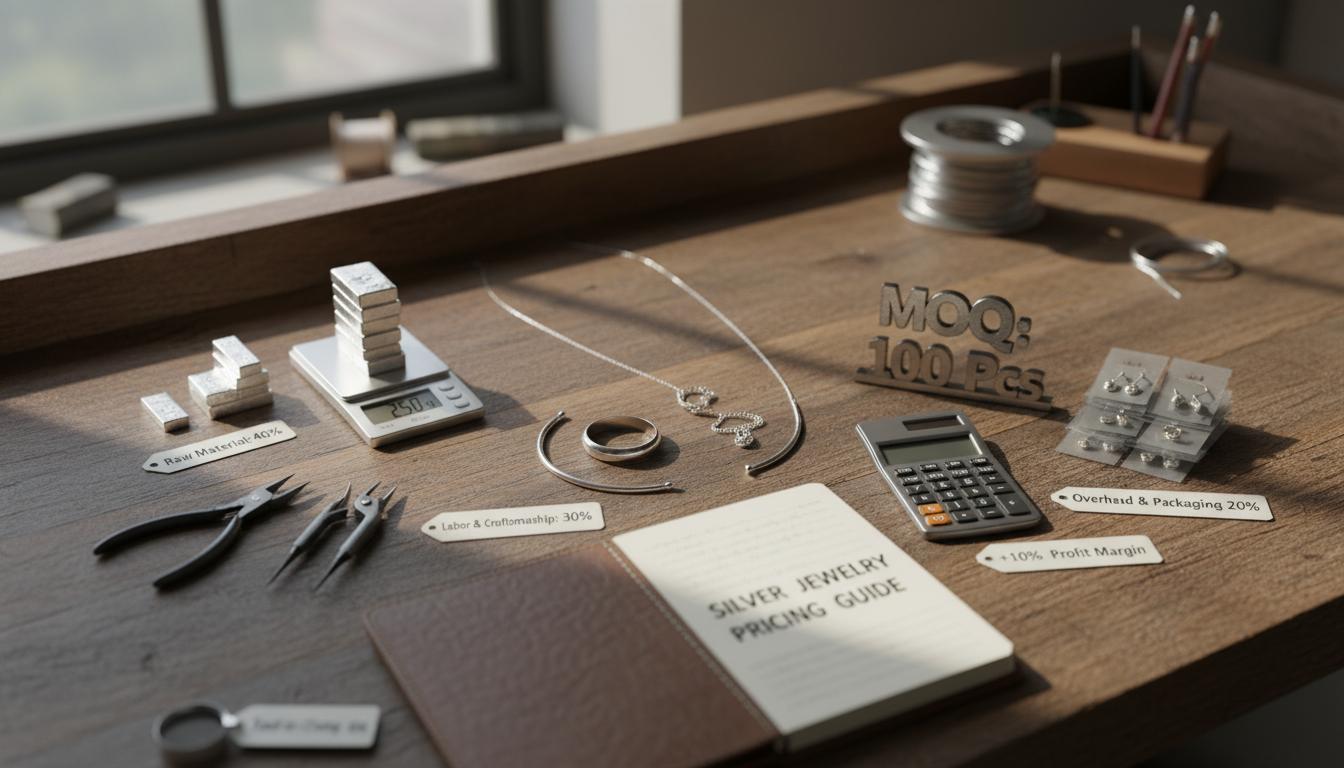
The silver jewelry business faced significant challenges in 2024. Economic uncertainty, fluctuating metal prices, intense competition, and changing customer expectations affected jewelry brands and manufacturers around the world.
Small and medium-sized businesses faced particular pressure. Many needed to control production costs while maintaining quality and competitive prices.
For jewelry manufacturers in Bali, Indonesia, these challenges also raised important questions about craftsmanship, workforce development, and international trade.
However, difficult market conditions can encourage businesses to improve their operations and develop stronger strategies.
This article examines the major silver jewelry business challenges in 2024 and explores the lessons that remain valuable for jewelry designers, retailers, wholesalers, and manufacturers.
1. Silver Price Volatility and Rising Material Costs
Silver prices play an important role in jewelry manufacturing.
Unlike some fashion accessories, sterling silver jewelry contains a substantial proportion of precious metal. As a result, changes in silver prices can directly affect production costs.
During 2024, silver prices experienced significant movements. Industrial demand, investment activity, interest rates, and economic uncertainty influenced the market.
These fluctuations created challenges for jewelry businesses that needed to prepare quotations and manage inventory.
How Silver Prices Affect Jewelry Manufacturing
Consider a sterling silver ring that weighs 10 grams.
The ring contains approximately 9.25 grams of pure silver, alongside other alloying metals.
When silver prices increase, the material cost rises.
However, manufacturers must also consider casting losses, recoverable scrap, production labor, finishing, packaging, and overhead expenses.
The final manufacturing cost therefore depends on much more than the silver price alone.
How Jewelry Businesses Can Respond
Jewelry manufacturers and brands can reduce pricing uncertainty through several practical measures:
- Set clear quotation validity periods.
- Review material costs before confirming large orders.
- Separate metal costs from manufacturing charges where appropriate.
- Monitor precious-metal inventory.
- Avoid unnecessary material waste.
- Review product margins regularly.
Clear pricing policies help both manufacturers and customers understand the effects of changing silver prices.
2. Economic Uncertainty and Changing Consumer Spending
Economic uncertainty influenced consumer purchasing decisions during 2024.
Inflation, borrowing costs, and broader financial concerns affected household budgets in many markets.
Some consumers became more cautious about discretionary purchases, including jewelry.
However, the effects varied between countries, customer groups, and product categories.
Affordable everyday jewelry may respond differently from luxury pieces or expensive statement designs.
Why Customer Segmentation Matters
Jewelry brands should understand who purchases their products.
For example, customers may buy silver jewelry for:
- Everyday fashion.
- Personal gifts.
- Special occasions.
- Meaningful or personalized designs.
- Collecting distinctive handmade pieces.
Each customer group has different priorities.
Some focus on price. Others value originality, quality, or emotional significance.
A brand that understands its audience can make better decisions about design, pricing, and marketing.
3. Increasing Competition in the Silver Jewelry Market
The silver jewelry market includes established brands, independent designers, online sellers, and large manufacturers.
E-commerce platforms have made it easier for businesses to reach international customers.
However, this accessibility has also increased competition.
Customers can compare thousands of products within minutes.
For smaller jewelry brands, competing only on price can become difficult.
Why Low Prices Are Not Always the Best Strategy
A low retail price may attract customers, but it can also reduce profit margins.
Manufacturers face similar pressure when buyers compare quotations from different countries.
A cheaper quotation does not always represent better value.
Differences in metal specifications, jewelry weight, finishing quality, and manufacturing methods can affect the price.
How Brands Can Differentiate Their Products
Jewelry businesses can compete through:
Original design
Create collections with a recognizable identity rather than copying popular products.
Consistent quality
Maintain reliable materials, construction, and finishing.
Personalization
Offer suitable engraving, custom details, or design variations.
Customer service
Provide accurate product information and responsive communication.
Brand storytelling
Explain the design inspiration, craftsmanship, and people behind the jewelry.
Strong differentiation helps businesses reduce their dependence on price competition.
4. Managing Manufacturing Costs and Profit Margins
Manufacturing costs extend beyond raw materials.
Jewelry production may involve model making, casting, soldering, stone setting, polishing, plating, inspection, and packaging.
Each stage requires time, equipment, and skilled workers.
Complex designs often require more labor than simple products.
For example, a plain silver band and an ornamental ring with multiple gemstones may have similar metal weights but very different manufacturing costs.
Understanding the Real Cost of Jewelry
A manufacturer should consider:
- Precious-metal costs.
- Gemstones and other components.
- Design and model-development expenses.
- Mold-making costs.
- Casting and fabrication labor.
- Stone setting.
- Surface finishing and plating.
- Quality control.
- Packaging and shipping preparation.
- Workshop overhead.
Accurate costing helps businesses establish sustainable prices.
Without a clear understanding of these expenses, a workshop may accept orders that generate little or no profit.
Improving Productivity Without Sacrificing Quality
Manufacturers can improve efficiency by organizing production more carefully.
Better scheduling, clear specifications, and early quality checks can reduce unnecessary rework.
Appropriate equipment can also support productivity.
However, businesses should avoid increasing output at the expense of workmanship.
A product that requires repeated repairs may cost more than one that workers manufacture correctly the first time.
5. Minimum Order Quantities and Small Jewelry Brands
Minimum order quantities, commonly called MOQs, can create challenges for new jewelry businesses.
Small brands often want to test several designs before committing to larger orders.
Manufacturers, meanwhile, need sufficient production volume to cover setup costs and organize work efficiently.
Why Manufacturers Set MOQs
Some manufacturing processes involve preparation costs that remain similar regardless of order size.
For example, a manufacturer may need to develop a master model, prepare a mold, and organize casting equipment before production begins.
These activities can make very small orders relatively expensive.
Finding a Practical Balance
Jewelry brands can manage initial production costs by:
- Starting with a limited number of designs.
- Selecting a small range of ring sizes.
- Using existing components where suitable.
- Testing samples before placing larger orders.
- Discussing realistic quantities with manufacturers.
A flexible manufacturing partner can help new brands understand the relationship between quantity and unit cost.
However, smaller quantities do not always result in lower total development expenses.
6. Supply Chain Challenges and Material Availability
Jewelry manufacturers depend on reliable access to metals, gemstones, findings, packaging, and specialized equipment.
Supply chain disruptions can affect production schedules and costs.
During 2024, businesses continued to face risks related to international transportation, geopolitical uncertainty, and changing supplier conditions.
For a jewelry workshop, even a small missing component can delay an entire order.
Practical Supply Chain Strategies
Manufacturers can improve reliability by:
- Maintaining relationships with more than one suitable supplier.
- Confirming material availability before accepting orders.
- Monitoring inventory for frequently used components.
- Communicating potential delays early.
- Avoiding unrealistic delivery commitments.
Brands should also consider material availability when developing new collections.
A design that depends on an unusual gemstone size or specialized clasp may require a longer production schedule.
7. The Challenge of Finding Skilled Jewelry Workers
Jewelry manufacturing requires specialized skills.
Casting technicians, wax carvers, silversmiths, stone setters, and polishers each contribute to production quality.
Many techniques require years of practice.
In Bali, traditional silver craftsmanship has strong historical connections with Celuk and neighboring areas in Gianyar.
However, younger workers now have a wider range of career opportunities.
This creates an important challenge for the industry’s long-term development.
Why Training Matters
Experienced workers need opportunities to transfer their knowledge.
New employees must learn technical skills, quality standards, and safe working practices.
Workshops can support workforce development through practical training and gradual increases in responsibility.
For example, a new worker may begin with basic filing and finishing before learning more complex assembly techniques.
Combining Experience with Technology
CAD, 3D printing, and modern casting equipment can improve certain manufacturing processes.
However, these tools do not eliminate the need for skilled workers.
A digital model still requires an understanding of metal thickness, construction, and finishing.
The most effective approach combines technical knowledge with appropriate technology.
8. Digital Marketing and the Growth of Online Jewelry Sales
Digital platforms have changed how jewelry brands communicate with customers.
Websites, social media, and online marketplaces allow businesses to reach international audiences.
However, online visibility does not automatically produce profitable sales.
Jewelry brands must build trust and provide a convincing customer experience.
Product Photography Matters
Customers cannot physically inspect jewelry when shopping online.
They depend on photographs, videos, and product descriptions.
Clear images should show the jewelry’s shape, surface finish, dimensions, and important details.
For products with gemstones, accurate photographs help customers understand the appearance of the stones.
Clear Product Specifications Build Trust
Online jewelry descriptions should explain:
- Metal composition.
- Product dimensions.
- Estimated weight.
- Gemstone details.
- Surface finish.
- Closure or earwire type.
- Available sizes.
Accurate information can reduce misunderstandings and unnecessary returns.
Building a Long-Term Online Presence
Jewelry brands can use educational articles, behind-the-scenes videos, and product-development stories to establish credibility.
Consistent communication often provides more lasting value than relying entirely on short-term promotions.
9. Counterfeit Products and Misleading Material Claims
Material authenticity remains an important concern in the jewelry industry.
Some sellers describe silver-colored jewelry as sterling silver without providing sufficient evidence of its composition.
Others may use unclear terminology when describing plated products.
These practices can confuse customers and weaken trust.
Understanding Sterling Silver 925
Sterling silver contains 92.5% silver and 7.5% other metals, commonly copper.
Silver-plated jewelry uses a silver coating over another material.
Both product types can have legitimate markets, but sellers should describe them accurately.
A 925 stamp may indicate sterling silver, although the stamp alone does not guarantee authenticity.
Manufacturers and brands can strengthen customer confidence through clear specifications, appropriate testing, and reliable documentation.
Honest product descriptions support long-term business relationships.
10. Sustainability and Responsible Jewelry Production
Environmental responsibility became an increasingly important topic for jewelry businesses.
Customers and brands may ask about recycled metals, material sourcing, production waste, and workplace practices.
However, businesses should distinguish genuine improvements from unsupported marketing claims.
Recycled Silver
Manufacturers can recover silver from suitable scrap and other sources.
After appropriate refining and alloying, recycled silver can meet sterling silver composition requirements.
Nevertheless, recycled content does not automatically mean that a finished product has no environmental impact.
Energy consumption, chemicals, transportation, and manufacturing practices also matter.
Reducing Production Waste
Jewelry workshops can improve material efficiency through better production planning.
For example, workers can collect suitable silver scrap for recovery and minimize avoidable defects.
Quality control also contributes to responsible manufacturing by reducing unnecessary remakes.
Responsible Communication
Brands should support sustainability claims with suitable evidence.
Clear, accurate information helps customers make informed purchasing decisions.
11. International Shipping, Customs, and Trade Requirements
International jewelry businesses must consider more than manufacturing costs.
Shipping charges, import duties, taxes, and customs procedures can affect the final cost of an order.
Requirements vary by destination country and product category.
Jewelry exporters should prepare accurate commercial documents and describe their products truthfully.
Important Considerations for Export Orders
Businesses should confirm:
- Product descriptions and material composition.
- Appropriate tariff classification.
- Commercial invoice details.
- Country of origin.
- Applicable destination-market requirements.
- Shipping insurance and delivery arrangements.
- Responsibility for import duties and taxes.
Jewelry brands should discuss these matters before placing orders.
Clear communication can reduce delays and unexpected expenses.
12. What the 2024 Challenges Taught Jewelry Businesses
The difficulties of 2024 highlighted several important lessons.
First, jewelry businesses need accurate costing and flexible pricing strategies.
Second, strong product identity matters more when customers can compare many similar products online.
Third, manufacturers must invest in quality and workforce development.
Fourth, digital tools can improve efficiency, but businesses still need practical manufacturing knowledge.
Finally, reliable relationships between brands, suppliers, and manufacturers help businesses manage uncertainty.
These lessons remain useful beyond 2024.
A jewelry business cannot control global silver prices or economic conditions.
However, it can improve internal operations, product development, communication, and customer service.
13. Opportunities for Bali’s Silver Jewelry Industry
Bali has a distinctive position in international jewelry manufacturing.
The island combines established metalworking traditions with experience serving overseas designers and brands.
Celuk and surrounding areas have long supported jewelry production.
Today, Bali-based manufacturers work on a wide range of designs, including traditional decorative jewelry and contemporary collections.
Custom Jewelry Manufacturing
Independent brands often need manufacturing partners who can interpret designs and produce samples.
Workshops with suitable development capabilities can support these projects.
Small-Batch Production
Some manufacturers offer relatively flexible quantities for selected products.
This approach can help brands test new collections before expanding production.
Contemporary Design Development
Traditional craftsmanship can complement modern jewelry styles.
Manufacturers may combine hand fabrication, casting, CAD, and specialized finishing according to each design.
Long-Term Brand Partnerships
Reliable communication and consistent quality can help workshops develop lasting relationships with international customers.
For smaller manufacturers, these partnerships may provide more stability than depending entirely on occasional orders.
14. Puri Lautan Mutiara: Our Perspective as a Bali Jewelry Manufacturer
At Puri Lautan Mutiara (PLM), we have worked in jewelry manufacturing in Bali since 1998.
Our workshop operates in Singapadu, Gianyar, near the traditional jewelry-making area of Celuk.
We work with international jewelry designers, brands, retailers, and wholesalers.
Our manufacturing capabilities include sterling silver jewelry, brass jewelry, selected gold jewelry, wax modeling, casting, hand fabrication, gemstone setting, and finishing.
We also use CAD and 3D printing when appropriate.
As a small jewelry manufacturing business, we understand the practical challenges of changing material prices, production planning, skilled labor, and international customer requirements.
We believe that successful manufacturing requires more than offering a competitive price.
Clear specifications, realistic production schedules, consistent quality, and honest communication are equally important.
We continue to develop our manufacturing methods while maintaining the craftsmanship that supports our work.
Learn more about our Custom Jewelry Manufacturing Services.
Frequently Asked Questions About the Silver Jewelry Business
What were the biggest challenges for silver jewelry businesses in 2024?
Major challenges included changing silver prices, economic uncertainty, competition, manufacturing costs, supply chain risks, and evolving customer expectations.
Why do silver prices affect jewelry manufacturers?
Sterling silver contains 92.5% silver. Changes in the market price directly affect the metal component of manufacturing costs.
How can small jewelry brands compete with larger companies?
Small brands can focus on distinctive designs, reliable quality, customer service, clear product information, and well-defined target markets.
Why do jewelry manufacturers require minimum order quantities?
Manufacturers need to cover development, setup, and production costs. MOQs vary according to design complexity, materials, and manufacturing methods.
Is recycled sterling silver different from regular sterling silver?
Properly refined and alloyed recycled silver can meet the same sterling silver composition requirements. Manufacturers should support recycled-content claims with appropriate documentation.
Can Bali jewelry manufacturers produce custom designs?
Yes. Some workshops provide custom development and manufacturing services for international designers and brands. Capabilities and minimum quantities vary.
What should jewelry brands consider when choosing a manufacturer?
Brands should evaluate material specifications, technical capabilities, sample quality, communication, pricing, production capacity, and delivery reliability.
Conclusion: Building a Stronger Silver Jewelry Business
The silver jewelry business faced several important challenges in 2024.
Material price volatility, economic uncertainty, global competition, and changing consumer expectations placed pressure on both brands and manufacturers.
However, these challenges also revealed opportunities for improvement.
Businesses can strengthen their position through better cost management, original designs, skilled workers, practical technology, and reliable customer relationships.
For Bali’s jewelry industry, the combination of traditional craftsmanship and modern manufacturing methods offers valuable opportunities.
Long-term success depends on the ability to adapt while maintaining quality and professional standards.
The most important lesson from 2024 is simple: a sustainable jewelry business needs more than attractive products. It needs sound operations, skilled people, and customers who trust its work.
Looking for a custom sterling silver jewelry manufacturer in Bali?
Contact Puri Lautan Mutiara to discuss your designs, sampling requirements, and production plans.
Puri Lautan Mutiara — Custom Jewelry Manufacturing in Bali Since 1998.