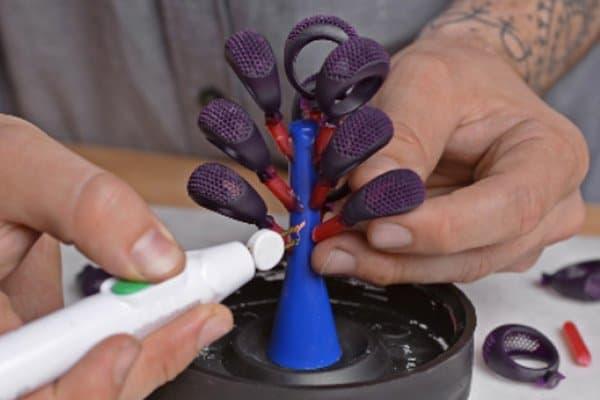
Have you ever wondered how jewelry manufacturers transform a simple wax model into a beautiful sterling silver ring, pendant, or bracelet?
Jewelry casting combines traditional craftsmanship, technical knowledge, and modern equipment. Each stage requires precision, from preparing the original design to polishing the finished product.
In Bali, experienced artisans use lost-wax casting to produce jewelry for local customers and international brands.
This guide explains the jewelry casting process step by step. We explore wax carving, mold making, wax injection, investment casting, metal finishing, and quality control.
What Is Lost-Wax Jewelry Casting?
Lost-wax casting is a manufacturing technique that transforms a wax pattern into a metal object.
First, the jewelry maker creates a wax model. Next, the casting technician surrounds the model with a special investment material.
The technician then heats the mold to remove the wax. This process leaves an empty cavity that matches the original jewelry design.
Afterward, the technician pours or introduces molten metal into the cavity using suitable casting equipment.
Once the metal solidifies, workers remove the investment material and reveal the jewelry.
This technique allows manufacturers to create intricate shapes and reproduce detailed designs.
Jewelry manufacturers commonly use lost-wax casting for sterling silver, gold, and suitable brass alloys.
The Jewelry Casting Process: 14 Essential Steps
A typical jewelry casting project follows these stages:
- Review the jewelry design and specifications.
- Create a wax or digital master model.
- Make a rubber or silicone mold when necessary.
- Produce wax patterns.
- Assemble the wax casting tree.
- Prepare the investment mold.
- Remove the wax through burnout.
- Melt and cast the metal.
- Remove the investment and separate the castings.
- Inspect the raw metal pieces.
- File, solder, and assemble the jewelry.
- Set gemstones and add decorative details.
- Polish and finish the surfaces.
- Perform final quality control.
Not every design requires all these steps. A one-off piece may proceed directly from wax carving to casting. Repeat orders often benefit from reusable molds.
Let’s examine each stage.
Step 1: Reviewing the Jewelry Design
Every successful casting project begins with a clear design.
Customers may provide sketches, photographs, CAD files, technical drawings, or physical samples.
The manufacturer reviews important details such as:
- Jewelry dimensions and target weight.
- Metal type and alloy.
- Ring size or bracelet measurements.
- Gemstone dimensions.
- Surface textures and finishing.
- Assembly requirements.
- Order quantities.
The manufacturer also checks whether the design suits the casting process.
For example, extremely thin sections may create filling problems. Complex shapes may require additional components or special mold preparation.
An experienced jewelry maker can identify these issues before production begins.
Early design adjustments often prevent expensive mistakes later.
Step 2: Creating the Master Model
The master model establishes the shape, dimensions, and decorative details of the jewelry.
Jewelry manufacturers generally use two main approaches.
Hand-Carved Wax Models
A skilled wax carver shapes the model using specialized tools.
The artisan cuts, files, and refines the wax until it matches the intended design.
Hand carving works particularly well for organic shapes, decorative textures, and traditional jewelry styles.
However, the wax carver must also understand casting limitations.
A beautiful wax model may still require adjustments to improve the strength or construction of the final metal piece.
CAD and 3D Printing
Modern jewelry designers often use computer-aided design, or CAD, to create digital models.
CAD software helps designers control dimensions, symmetry, and proportions.
After completing the digital model, the manufacturer can produce a physical pattern using a suitable 3D printer.
Some printed materials support direct casting. Others work better as master models for mold making.
Both methods have advantages.
Hand carving provides flexibility for certain artistic designs, while CAD offers precise control over complex geometry.
Many manufacturers combine traditional skills with digital technology.
Step 3: Making the Rubber Mold
When customers need multiple copies of the same design, manufacturers often create a reusable mold.
The mold maker places the master model inside rubber or silicone mold material.
After the material cures or undergoes the appropriate processing, the mold maker carefully opens it and removes the master.
The resulting cavity reproduces the original design.
Why Does Mold Making Matter?
A good mold helps the workshop produce consistent wax patterns.
It also reduces the need to carve every piece individually.
However, mold makers must consider several technical factors.
Incorrect cutting, trapped air, or distortion can affect the wax patterns.
The manufacturer must also account for dimensional changes during molding, casting, and finishing.
A carefully prepared mold improves repeatability and production efficiency.
Step 4: Producing Wax Patterns
After preparing the mold, the technician injects suitable wax into its cavity.
The wax cools and forms a copy of the jewelry design.
The technician removes the pattern and inspects it.
Common wax defects include:
- Air bubbles.
- Incomplete filling.
- Damaged details.
- Distorted shapes.
- Visible mold lines.
- Incorrect dimensions.
Workers correct minor imperfections before assembling the casting tree.
This inspection plays an important role because the casting process can reproduce defects from the wax.
Good wax preparation helps reduce production waste and unnecessary repairs.
Step 5: Building the Wax Casting Tree
The next stage involves assembling the wax patterns into a casting tree.
Workers attach individual wax pieces to a central wax structure through channels called sprues.
These channels allow molten metal to reach each jewelry cavity.
A casting tree may contain several identical pieces or a combination of different designs.
The technician selects the arrangement according to the jewelry shapes, alloy, casting equipment, and production requirements.
Why Is Sprue Placement Important?
Sprue placement affects metal flow and solidification.
Poor sprue design may contribute to porosity, incomplete filling, or other casting problems.
Experienced casting technicians carefully evaluate each tree before proceeding.
The goal is to support consistent casting quality while using the available equipment efficiently.
Step 6: Preparing the Investment Mold
The technician places the wax tree inside a metal flask.
Next, the technician mixes a specialized investment powder with water according to the material manufacturer’s instructions.
The mixture flows around the wax patterns and captures their surface details.
Some workshops use vacuum equipment to help remove trapped air during preparation.
The investment then sets and forms a heat-resistant mold.
Why Does Investment Quality Matter?
The investment must reproduce fine details and withstand the casting process.
Incorrect mixing, unsuitable materials, or poor handling may cause surface defects.
Different alloys and casting methods may require different investment materials.
Casting technicians must therefore follow the appropriate procedures for each application.
Step 7: Burnout — Removing the Wax
After the investment sets, the technician places the flask inside a burnout furnace.
The furnace follows a controlled heating schedule.
During burnout, heat removes the wax or other suitable pattern material.
This process leaves a cavity that matches the original jewelry model.
The technician adjusts the burnout procedure according to the investment, flask size, pattern material, and casting requirements.
Proper burnout helps prevent contamination and other casting defects.
The process also prepares the mold for the next stage.
Because burnout involves high temperatures and fumes, trained workers must use suitable equipment and ventilation.
Step 8: Melting and Casting Sterling Silver
Now the casting technician prepares the metal.
For sterling silver jewelry, manufacturers commonly use an alloy containing 92.5% silver and 7.5% other metals, typically copper.
The technician weighs the material and prepares the melting equipment.
Next, the technician heats the metal until it reaches the appropriate casting condition.
The required temperature depends on the alloy composition, equipment, and jewelry design.
Pure silver melts at approximately 961.8°C. However, this figure does not represent a universal casting temperature for sterling silver.
Common Jewelry Casting Methods
Jewelry manufacturers use several casting systems.
Centrifugal casting
The machine uses rotational force to move molten metal into the mold.
Vacuum-assisted casting
The equipment uses a pressure difference to help the molten metal fill the cavities.
Pressure-assisted casting
Certain systems use controlled pressure to support metal flow.
Each method has advantages and limitations.
The manufacturer selects the most suitable approach according to the equipment, alloy, and product requirements.
Step 9: Removing the Investment and Cutting the Tree
After casting, the metal must solidify and cool according to the selected process.
Workers then remove the investment material from the metal casting tree.
This stage reveals the individual jewelry pieces attached to the central metal structure.
The pieces still have rough surfaces and sprue connections.
Workers cut each piece from the tree using appropriate tools.
They also remove excess metal around the attachment points.
At this stage, the jewelry begins to resemble the intended design, but it still needs substantial finishing work.
Step 10: Inspecting the Raw Castings
Before further processing, workers inspect each casting.
They look for visible defects and compare the pieces with the approved design.
Common Casting Defects
Porosity
Small cavities may appear inside the metal because of gas-related effects, shrinkage, or other casting conditions.
Incomplete filling
Molten metal may fail to reach certain parts of the mold.
Surface imperfections
The casting may show rough areas, investment-related defects, or other irregularities.
Dimensional differences
The finished casting may differ from the original model because of shrinkage or other process variations.
Workers can correct some minor imperfections.
However, serious defects may require a new casting.
Careful inspection helps the workshop avoid wasting time on unsuitable pieces.
Step 11: Filing, Soldering, and Assembly
After inspection, silversmiths begin refining the metal components.
They remove sprue marks, smooth surfaces, and prepare the jewelry for assembly.
Some designs consist of a single casting.
Others require several components.
For example, earrings may need posts or earwires. Pendants may require bails, while bracelets may need clasps or hinges.
Silversmiths join suitable components through soldering or other appropriate assembly methods.
Accurate alignment and strong joints contribute to both appearance and durability.
A successful casting alone does not guarantee a high-quality finished product.
The assembly stage also requires skilled craftsmanship.
Step 12: Setting Gemstones and Adding Decorative Details
Many jewelry designs incorporate gemstones, cubic zirconia, pearls, or other decorative materials.
Stone setters carefully prepare each setting according to the stone’s dimensions and characteristics.
Common methods include:
- Bezel setting.
- Prong setting.
- Flush setting.
- Other specialized settings.
The setter must secure the stone without causing unnecessary damage.
Some materials, including pearls and certain delicate gemstones, require special handling.
Workers may also add engraved details, textures, or decorative components during this stage.
Traditional Balinese-style jewelry sometimes includes intricate ornamental metalwork.
The manufacturer plans the sequence of operations according to the design and materials.
Step 13: Polishing and Finishing the Jewelry
Polishing transforms rough metal components into attractive finished jewelry.
Workers use files, abrasives, polishing compounds, and suitable equipment to refine the surfaces.
Different designs require different finishes.
High Polish
A high-polish finish creates a bright, reflective surface.
Satin or Brushed Finish
A satin finish produces a softer appearance with controlled surface texture.
Oxidized Finish
Oxidation darkens selected areas of the silver and emphasizes decorative details.
Textured Finish
Hammering, engraving, and other techniques create intentional surface patterns.
Gold or Rhodium Plating
Some designs require additional plating to achieve a particular appearance or surface specification.
The finishing team must follow the approved design.
Excessive polishing can remove decorative details or alter dimensions.
Careful finishing improves the overall appearance and consistency of the jewelry.
Step 14: Final Quality Control
The quality-control team checks the finished jewelry before packing.
Inspectors compare each piece with the approved sample and technical specifications.
They typically examine:
- Dimensions and ring sizes.
- Surface finishing.
- Solder joints.
- Stone security.
- Clasp and hinge operation.
- Sharp edges.
- Assembly quality.
- Overall appearance.
For repeat production, inspectors also check consistency between pieces.
A reliable workshop monitors quality throughout production rather than relying only on final inspection.
Early inspections help reduce defects and unnecessary rework.
How Long Does Jewelry Casting Take?
Production time depends on the design, order quantity, materials, and manufacturing requirements.
A new design usually requires more preparation than a repeat order.
The manufacturer may need to create a master model, prepare molds, produce samples, and obtain customer approval.
Repeat orders can move more efficiently when the workshop already has an approved mold.
However, casting represents only one stage of production.
Assembly, stone setting, polishing, and quality control also require time.
At Puri Lautan Mutiara, typical custom jewelry production takes approximately 4–6 weeks, depending on the project and workshop schedule.
Complex designs or additional sampling may require more time.
Is Cast Jewelry Lower Quality Than Handmade Jewelry?
No. The manufacturing method alone does not determine quality.
Casting and hand fabrication serve different purposes.
Lost-wax casting can reproduce detailed shapes and support repeat production.
Hand fabrication offers advantages for certain constructions and decorative techniques.
Many jewelry manufacturers combine both methods.
For example, a workshop may cast a ring body, solder additional components, set gemstones by hand, and polish the finished piece.
The final quality depends on design suitability, material selection, construction, casting control, and finishing.
Both methods can produce excellent jewelry when skilled workers follow appropriate procedures.
Why Jewelry Brands Choose Lost-Wax Casting
Lost-wax casting offers several benefits for jewelry designers and brands.
Design Flexibility
Casting can reproduce intricate shapes, textures, and decorative details.
Repeatable Production
Reusable molds help manufacturers produce consistent wax patterns for future orders.
Production Efficiency
Casting can support efficient manufacturing when the design and order quantity suit the process.
Different Jewelry Styles
Manufacturers use casting for minimalist, traditional, sculptural, and contemporary designs.
Skilled Hand Finishing
After casting, artisans can refine the jewelry through soldering, stone setting, and polishing.
However, not every design suits casting.
Extremely thin structures, complex assemblies, and certain hollow forms may require adjustments or alternative manufacturing methods.
An experienced manufacturer should identify these limitations during product development.
Jewelry Casting in Bali: Traditional Craftsmanship Meets Modern Technology
Bali has a well-established jewelry-making community, particularly around Celuk and other parts of Gianyar.
Local artisans have developed skills in metal fabrication, decorative techniques, soldering, and finishing.
Today, many workshops also use CAD, 3D printing, mold-making equipment, and modern casting systems.
These technologies help manufacturers meet different design requirements.
A workshop may produce traditional Balinese-style silver jewelry for one customer and contemporary minimalist pieces for another.
The process involves several specialists.
Wax carvers prepare models. Mold makers develop reusable molds. Casting technicians produce metal components.
Silversmiths assemble the pieces, stone setters secure gemstones, and polishers refine the final surfaces.
Each worker contributes to the finished product.
This combination of craftsmanship and technology supports Bali’s position in international jewelry manufacturing.
Custom Jewelry Casting at Puri Lautan Mutiara
At Puri Lautan Mutiara (PLM), we have manufactured jewelry in Bali since 1998.
Our workshop operates in Singapadu, Gianyar, near the traditional jewelry-making area of Celuk.
We work with international jewelry designers, brands, retailers, and wholesalers.
Our manufacturing capabilities include:
- Hand-carved wax modeling.
- CAD jewelry development.
- 3D printing for suitable applications.
- Rubber mold making.
- Wax injection and pattern preparation.
- Lost-wax casting.
- Hand fabrication and soldering.
- Gemstone setting.
- Polishing and finishing.
- Quality control.
We manufacture jewelry using sterling silver 925, brass, and selected gold alloys.
As a small workshop, we review each project according to its design, materials, quantity, and production requirements.
We aim to combine experienced craftsmanship with practical manufacturing methods and clear communication.
Explore our Custom Jewelry Manufacturing Services for more information.
Frequently Asked Questions About Jewelry Casting
What is the difference between lost-wax casting and investment casting?
Jewelry manufacturers often use these terms interchangeably. Lost-wax casting refers to the removable wax pattern, while investment casting describes the broader process that uses a refractory investment mold.
Can manufacturers cast sterling silver 925?
Yes. Jewelry manufacturers commonly use sterling silver 925 for casting rings, pendants, earrings, and other products.
Does every jewelry design require a rubber mold?
No. A manufacturer can cast a one-off wax model directly. Reusable molds become useful when customers require multiple copies.
Can a 3D printer produce jewelry casting patterns?
Yes. Certain 3D-printing materials support direct investment casting. Manufacturers may also use printed models to create reusable molds.
Does casting replace handmade craftsmanship?
No. Workers still perform many important tasks, including filing, soldering, assembly, stone setting, and polishing.
What causes porosity in cast jewelry?
Porosity may result from gas-related effects, solidification shrinkage, or other casting conditions. Proper process control helps reduce these defects.
Can Bali manufacturers produce custom jewelry for international brands?
Yes. Some Bali workshops provide custom jewelry development and manufacturing for international customers. Buyers should confirm each workshop’s capabilities, minimum quantities, and quality requirements.
Conclusion: From Wax Model to Finished Jewelry
Jewelry casting combines design, technical knowledge, and craftsmanship.
The process begins with a carefully prepared model and continues through mold making, wax production, investment, burnout, and metal casting.
After casting, skilled artisans refine, assemble, set stones, and polish the jewelry.
Every stage contributes to the final quality.
For jewelry designers and brands, understanding the process helps improve product development and communication with manufacturers.
In Bali, traditional skills and modern manufacturing methods continue to support custom jewelry production for international markets.
Planning to develop your own sterling silver or brass jewelry collection?
Contact Puri Lautan Mutiara to discuss your designs, sampling requirements, materials, and production quantities.
Puri Lautan Mutiara — Custom Jewelry Manufacturing in Bali Since 1998.