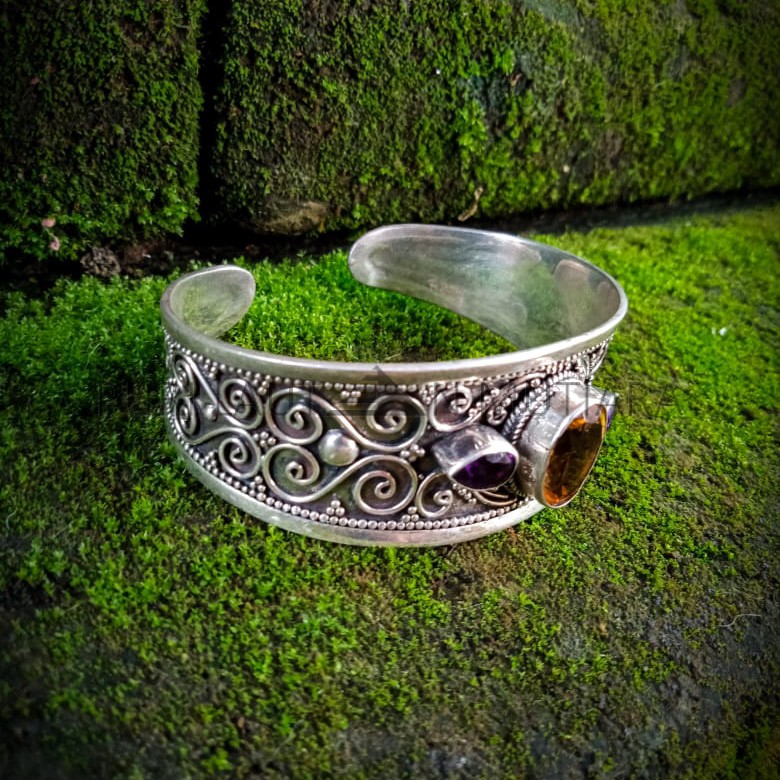
Bali is widely known for its beautiful landscapes, rich cultural heritage, and artistic traditions. Beyond its temples, beaches, and traditional architecture, the island is also home to a distinctive jewelry-making industry.
Among its many creative traditions, Bali silver jewelry holds a special place.
Recognized for intricate metalwork, decorative textures, and skilled craftsmanship, Balinese silver jewelry has attracted collectors, designers, and jewelry enthusiasts from around the world.
From traditional ornamental designs to contemporary sterling silver collections, Bali’s jewelry industry continues to evolve while maintaining a connection to its artistic heritage.
But what makes Bali silver jewelry distinctive? How is it made, and why does it remain relevant to modern jewelry brands?
This guide explores its history, traditional techniques, materials, manufacturing processes, and continuing development.
The History of Silver Jewelry Making in Bali
Metalworking has been part of Balinese artistic and cultural life for generations.
Historically, metal artisans produced various objects, including ceremonial accessories, decorative items, and ornaments used in religious and community activities.
Bali’s artistic traditions developed through interactions with other regions, particularly Java, as well as through the island’s own cultural and religious practices.
The Majapahit period in the 14th century contributed to important cultural developments in Bali, although the history of Balinese metalworking cannot be attributed to a single event or period.
Over time, specialized communities developed reputations for particular crafts.
One of the best-known centers of silver and gold jewelry production is Celuk Village, located in Sukawati, Gianyar.
Celuk and neighboring villages became associated with skilled silversmiths, family workshops, and jewelry businesses.
As tourism and international trade expanded, local artisans began producing a wider variety of jewelry for both domestic and overseas customers.
Today, Bali’s jewelry industry includes traditional artisans, independent designers, small manufacturing workshops, and businesses serving international jewelry brands.
Celuk Village: A Center of Balinese Silversmithing
Celuk is widely recognized as one of Bali’s important silver jewelry-making areas.
The village is known for workshops and galleries producing rings, earrings, bracelets, necklaces, pendants, and decorative silver objects.
Many artisans have developed their skills through practical experience, family traditions, and training with established craftspeople.
However, Bali’s silver jewelry industry is not limited to Celuk.
Nearby areas such as Singapadu and other parts of Gianyar also support jewelry production and related manufacturing activities.
The industry has expanded beyond traditional tourist-oriented products.
Today, some workshops manufacture contemporary designs, custom collections, and jewelry developed for international retailers and wholesalers.
This development demonstrates how traditional craftsmanship can adapt to changing markets.
What Makes Bali Silver Jewelry Unique?
Bali silver jewelry is often associated with detailed decorative work and recognizable artistic influences.
While styles vary between manufacturers and designers, several characteristics are particularly associated with traditional Balinese silver jewelry.
Intricate Decorative Patterns
Many traditional designs feature elaborate patterns created using fine wires, small metal spheres, engraving, or textured surfaces.
These details can create depth and visual interest that distinguish the jewelry from simpler polished designs.
Inspiration from Nature
Flowers, leaves, vines, animals, and organic shapes frequently appear in Balinese decorative arts.
Jewelry designers may interpret these influences through carved surfaces, flowing metal forms, or ornamental patterns.
Contrasting Silver Finishes
Traditional-style silver jewelry often combines polished surfaces with darker recessed areas.
This contrast emphasizes decorative details and creates a sense of depth.
Skilled Hand Finishing
Even when a piece is produced using casting, skilled finishing can be important to its final appearance.
Filing, soldering, polishing, oxidation, and inspection all contribute to the quality of the finished jewelry.
Not every piece made in Bali has these characteristics. Contemporary Bali-based manufacturers also produce minimalist, geometric, and modern jewelry without traditional ornamentation.
Traditional Techniques Used in Balinese Silver Jewelry
One of the most interesting aspects of Bali silver jewelry is the variety of techniques used to create decorative metalwork.
1. Granulation
Granulation is a decorative technique involving small metal spheres arranged into patterns.
These tiny details may be attached to a metal surface using suitable joining methods.
Granulation can create dotted textures, borders, and complex ornamental arrangements.
The technique requires precision because the individual elements must be positioned carefully.
Granulated details are particularly recognizable in traditional-style Balinese jewelry.
2. Filigree
Filigree uses fine metal wires to create decorative shapes and patterns.
Artisans bend and arrange the wires into spirals, curves, and other forms before joining them into the design.
The resulting jewelry can appear delicate and intricate.
Filigree may be used in earrings, pendants, rings, and other decorative pieces.
3. Hand Engraving and Texturing
Engraving and texturing techniques allow artisans to add patterns directly to the metal surface.
Depending on the design, these may include carved lines, stamped textures, hammered surfaces, or decorative relief.
Hand-applied details can give jewelry an individual character.
4. Hand Fabrication and Soldering
Hand fabrication involves constructing jewelry from metal components such as sheet, wire, tubing, and other prepared forms.
Artisans use tools to cut, bend, shape, and assemble these components.
Soldering joins metal parts together.
This approach is particularly useful for designs requiring specialized construction or decorative assemblies.
5. Oxidized Silver Finishing
Oxidation creates darkened areas on the silver surface.
When the raised sections are subsequently polished, the darker recessed areas can emphasize decorative details.
This finish is frequently associated with traditional Balinese jewelry.
Oxidized finishing should be distinguished from unwanted tarnish because the darkened areas are intentionally incorporated into the design.
Sterling Silver 925: A Popular Material for Bali Jewelry
Sterling silver is one of the most commonly used precious metals in jewelry manufacturing.
It contains 92.5% silver and 7.5% other metals, typically copper.
Pure silver is relatively soft, so alloying improves its suitability for many jewelry applications.
Sterling silver provides several advantages:
- A bright, attractive appearance.
- Versatility for traditional and modern designs.
- Compatibility with various manufacturing techniques.
- Suitability for many types of gemstone settings.
- Options for polished, satin, textured, or oxidized finishes.
Sterling silver can also be combined with selected plating finishes, depending on the intended design.
However, not all silver-colored jewelry sold in Bali is necessarily solid sterling silver.
Some products may use silver plating over another metal.
Buyers should confirm the material specification rather than relying only on appearance.
A 925 stamp may indicate sterling silver, but material testing or reliable supplier documentation provides stronger assurance when authenticity is important.
Handmade vs. Cast Bali Silver Jewelry
One common misunderstanding is that all Bali silver jewelry is entirely handmade.
In reality, different manufacturing methods are used depending on the design, quantity, and required construction.
Handmade or Hand-Fabricated Jewelry
Hand-fabricated jewelry is constructed using metalworking techniques such as cutting, bending, soldering, and shaping.
This method can be particularly suitable for certain decorative designs, unique pieces, and specialized construction.
Lost-Wax Casting
Lost-wax casting is widely used in modern jewelry manufacturing.
A model is created, often from wax or a digitally developed pattern, and used to produce a mold cavity into which molten metal is cast.
The resulting jewelry components are then cleaned, refined, assembled, and finished.
Casting is useful when a design needs to be reproduced consistently.
Combining Both Methods
Many jewelry pieces use a combination of techniques.
For example, a cast pendant may receive hand-fabricated decorative components, individually set gemstones, and detailed hand polishing.
Neither method is automatically superior.
The appropriate choice depends on the design, production requirements, and quality standards.
For buyers, the most important considerations are accurate construction, workmanship, finishing, and suitability for the intended use.
Cultural Influences and Symbolism in Bali Silver Jewelry
Balinese art and design are influenced by nature, architecture, mythology, and religious traditions.
These influences can also appear in jewelry.
Floral ornaments, geometric patterns, and traditional decorative elements may reflect broader Balinese artistic styles.
Certain motifs have specific cultural or religious associations.
However, their meanings should not be generalized.
Not every floral design represents prosperity, and not every animal motif symbolizes protection.
The interpretation depends on the specific motif, its historical context, and how it is used.
Designers developing Bali-inspired jewelry should take care when adapting sacred or culturally significant imagery.
Understanding the background of a symbol helps create designs that are both meaningful and respectful.
The Evolution of Contemporary Bali Silver Jewelry
Although traditional ornamental jewelry remains important, Bali’s jewelry industry has developed far beyond a single recognizable style.
Modern manufacturers work with a broad range of design directions, including:
Minimalist jewelry
Simple rings, delicate necklaces, geometric earrings, and clean metal surfaces.
Statement jewelry
Larger rings, cuffs, sculptural earrings, and bold decorative pieces.
Gemstone jewelry
Designs featuring semi-precious gemstones, pearls, mother-of-pearl, and other decorative materials.
Mixed-metal jewelry
Combinations of sterling silver, brass, and selected plating finishes.
Personalized jewelry
Custom pendants, engraved jewelry, signet rings, and designs incorporating meaningful symbols.
Private-label collections
Jewelry manufactured according to the specifications of independent designers and international brands.
This diversity is important because the international jewelry market includes many different customer preferences.
Bali’s manufacturing industry can support contemporary design while maintaining access to traditional craftsmanship.
How Modern Technology Supports Balinese Craftsmanship
Jewelry manufacturing has changed considerably with the introduction of digital design and production tools.
Computer-aided design, commonly known as CAD, allows jewelry designs to be developed as three-dimensional models.
These models can help manufacturers evaluate dimensions, proportions, and construction before producing a physical sample.
3D printing can also support model making and casting preparation.
Other technologies, including laser engraving and specialized manufacturing equipment, can assist with selected production tasks.
However, digital tools do not replace practical jewelry-making knowledge.
A model may look attractive on a computer screen but still require adjustments for casting, soldering, stone setting, or everyday wear.
Experienced artisans and technicians remain essential in turning a design into a reliable finished product.
The combination of traditional craftsmanship and modern technology offers valuable possibilities for Bali’s jewelry industry.
How to Identify Quality Bali Silver Jewelry
Whether purchasing jewelry for personal use or sourcing products for a retail business, quality should be evaluated carefully.
Check the Material
Confirm whether the jewelry is solid sterling silver, silver-plated brass, or another material.
If required, request material documentation or appropriate testing.
Examine the Finishing
Look for smooth edges, consistent polishing, and carefully finished decorative details.
Unwanted scratches, rough surfaces, and visible casting defects may indicate insufficient finishing.
Inspect Solder Joints
Joints should be properly constructed and finished.
Poorly executed soldering can affect both appearance and durability.
Check Gemstone Settings
Gemstones should be appropriately secured and aligned.
The setting should suit the type, dimensions, and characteristics of the stone.
Test Moving Components
Clasps, hinges, and other functional parts should operate correctly.
Evaluate Comfort
Jewelry should be practical to wear.
For example, oversized earrings should be evaluated for weight and balance, while rings should have suitable internal surfaces and dimensions.
Ask About Production Consistency
For wholesale or custom manufacturing orders, an approved sample is important.
The sample establishes the design and quality expectations for subsequent production.
Caring for Bali Sterling Silver Jewelry
Proper care can help preserve the appearance of sterling silver jewelry.
Silver may develop tarnish through exposure to sulfur-containing substances in the environment.
This is a natural surface reaction and does not necessarily indicate poor material quality.
For suitable plain sterling silver jewelry, gentle cleaning with mild soap, lukewarm water, and a soft cloth may help remove everyday dirt.
A silver polishing cloth can be useful for removing light tarnish from appropriate unplated surfaces.
However, special care is required for jewelry with oxidation, plating, pearls, opals, or other delicate materials.
Avoid aggressive household cleaning methods that may damage decorative finishes.
Store jewelry separately in a dry environment and remove it before activities involving harsh chemicals.
For more detailed guidance, read our article on Caring for Sterling Silver Jewelry at Home.
Bali Silver Jewelry for International Designers and Brands
Bali’s jewelry industry is not limited to souvenir shops or finished products for individual customers.
It also supports international designers, retailers, and jewelry businesses developing their own collections.
Working with a Bali jewelry manufacturer can provide access to different manufacturing techniques, design-development experience, and skilled finishing.
However, choosing the right manufacturing partner requires careful evaluation.
International buyers should consider:
- Experience with the required jewelry materials.
- Ability to interpret technical drawings and specifications.
- Sampling and product-development capabilities.
- Suitable manufacturing techniques.
- Quality-control procedures.
- Realistic minimum order quantities.
- Communication and production updates.
- Export documentation and shipping arrangements.
A reliable manufacturing relationship depends on more than the appearance of a finished sample.
Consistency, communication, and practical problem-solving are equally important.
Custom Bali Silver Jewelry Manufacturing at Puri Lautan Mutiara
At Puri Lautan Mutiara (PLM), we have been involved in jewelry manufacturing in Bali since 1998.
Our workshop is based in Singapadu, Gianyar, near the traditional silversmithing area of Celuk.
We work with international jewelry designers, brands, retailers, and wholesalers on custom jewelry development and manufacturing.
Our production capabilities include sterling silver jewelry, brass jewelry, selected gold jewelry, wax modeling, casting, hand fabrication, gemstone setting, and finishing.
We also use CAD and 3D printing where suitable for the project.
As a small jewelry manufacturing business, we focus on practical collaboration with customers, from reviewing initial designs to sampling and production.
Each project is evaluated according to its design complexity, materials, quantities, and manufacturing requirements.
Our approach combines the experience of Balinese jewelry craftsmanship with modern production methods.
For more information, explore our Custom Jewelry Manufacturing Services.
The Future of Bali Silver Jewelry
Bali’s silver jewelry industry faces both opportunities and challenges.
International competition, changing consumer preferences, fluctuating precious-metal prices, and the need to develop younger artisans all influence the industry’s future.
At the same time, new technology and global communication provide opportunities for smaller manufacturers to work with customers around the world.
Preserving traditional craftsmanship does not require every product to follow historical designs.
Instead, the industry can continue developing by maintaining valuable skills while adapting to contemporary design and manufacturing requirements.
Training younger workers, improving production quality, and building dependable international relationships will be important to this development.
The future of Bali silver jewelry will depend on its ability to remain both culturally distinctive and commercially relevant.
Frequently Asked Questions About Bali Silver Jewelry
Is Bali silver jewelry real sterling silver?
Many Bali jewelry manufacturers produce genuine 925 sterling silver jewelry. However, not every silver-colored product is sterling silver. Buyers should verify the material specification with the seller or manufacturer.
What is Bali silver jewelry known for?
Traditional Bali silver jewelry is especially recognized for detailed metalwork, including granulation, filigree, ornamental patterns, and contrasting polished and oxidized finishes.
Is all Bali silver jewelry handmade?
No. Bali jewelry manufacturers use various techniques, including hand fabrication, casting, and combinations of traditional and modern production methods.
Where is silver jewelry made in Bali?
Celuk Village in Gianyar is one of the best-known centers of Balinese silversmithing. Jewelry manufacturing also takes place in neighboring communities and other areas of Bali.
Can Bali manufacturers produce custom jewelry designs?
Yes. Some Bali manufacturers specialize in custom jewelry development and production for designers, brands, and wholesale customers. Capabilities vary between workshops.
Why does Bali sterling silver jewelry sometimes turn dark?
Sterling silver can tarnish naturally when exposed to sulfur-containing substances. Some traditional Bali silver jewelry also features intentional oxidation to emphasize decorative details.
Conclusion: A Craft That Continues to Evolve
Bali silver jewelry represents a combination of artistic heritage, technical skill, and continuing innovation.
Its traditional techniques, including granulation, filigree, and detailed hand finishing, remain valuable parts of the island’s craftsmanship.
At the same time, modern casting, CAD, and contemporary design have expanded the possibilities for Bali’s jewelry manufacturers.
For jewelry enthusiasts, Bali silver offers a wide range of distinctive designs.
For designers and brands, Bali provides opportunities to collaborate with experienced manufacturers who understand both traditional techniques and modern production requirements.
The enduring value of Bali silver jewelry lies not only in its decorative beauty, but also in the knowledge, skill, and care involved in making it.
Looking for a Bali jewelry manufacturer for your own collection?
Contact Puri Lautan Mutiara to discuss your jewelry designs, materials, sampling, and production requirements.
Puri Lautan Mutiara — Custom Jewelry Manufacturing in Bali Since 1998.