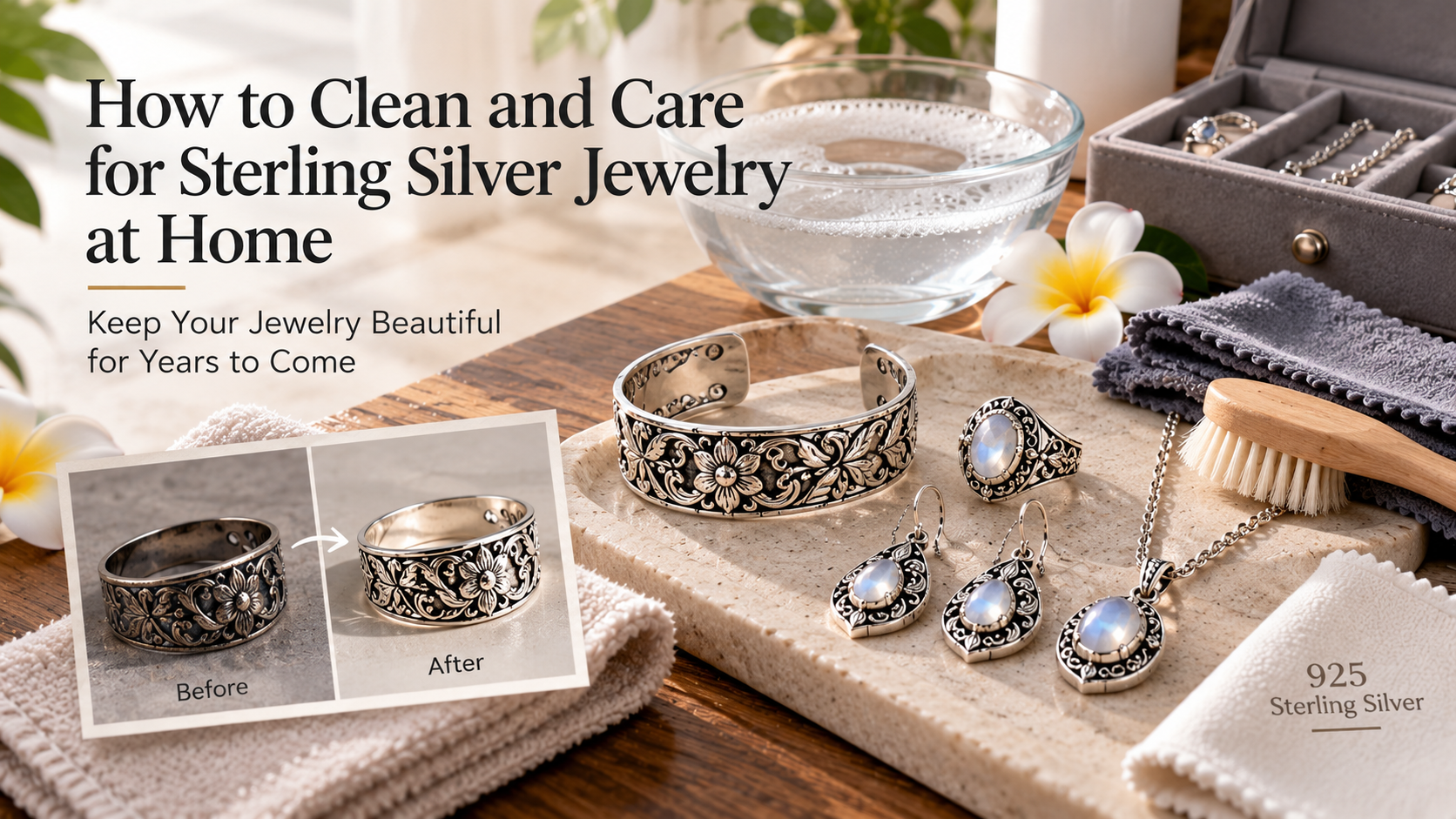
Sterling silver jewelry is loved for its timeless beauty, versatility, and brilliant shine. Whether you own a simple silver ring, an elegant necklace, or a pair of intricately detailed earrings, proper care can help preserve its appearance for many years.
However, sterling silver can gradually lose its shine and develop a darker surface known as tarnish.
The good news is that tarnishing is a natural characteristic of silver, and it does not necessarily mean your jewelry is damaged or made from poor-quality material.
With the right cleaning methods, storage habits, and preventive care, you can keep your favorite pieces looking beautiful.
In this guide, we explain how to clean sterling silver jewelry safely at home, what causes tarnish, which cleaning methods to avoid, and how to care for jewelry with gemstones, oxidation, or gold plating.
What Is Sterling Silver 925?
Sterling silver is an alloy containing 92.5% pure silver and 7.5% other metals, commonly copper.
Pure silver is relatively soft, so alloying it with other metals improves its strength and makes it more suitable for everyday jewelry.
Sterling silver is widely used for rings, earrings, necklaces, bracelets, pendants, and many other jewelry designs.
You may notice a small 925 stamp on some silver jewelry. This indicates the sterling silver standard, although the presence of a stamp alone is not proof of authenticity.
Sterling silver is a precious metal, but like many metals, its appearance can change through exposure to the surrounding environment.
Why Does Sterling Silver Jewelry Tarnish?
Tarnish is a chemical reaction that occurs when silver reacts with sulfur-containing substances in the environment.
This reaction creates a thin surface layer that may appear yellowish, brown, gray, or black.
Several factors can accelerate tarnishing:
- Exposure to sulfur compounds in the air.
- Humidity and moisture.
- Sweat and skin-care products.
- Perfume, hairspray, and cosmetics.
- Chlorine and household cleaning chemicals.
- Improper storage.
People living in humid or coastal environments may notice tarnish developing more quickly.
The important thing to understand is that tarnish is not the same as rust.
Unlike iron, sterling silver does not develop iron rust. Most ordinary surface tarnish can be managed with appropriate cleaning and care.
How to Clean Sterling Silver Jewelry Safely at Home
For ordinary, unplated sterling silver jewelry without delicate gemstones or special finishes, gentle cleaning is usually the best starting point.
Step 1: Prepare a Mild Cleaning Solution
Fill a small bowl with lukewarm water and add a few drops of mild, fragrance-free dish soap.
Avoid strong detergents, bleach, and household cleaning products.
The purpose of the solution is to loosen everyday dirt, skin oils, and residue rather than aggressively remove the metal’s surface.
Step 2: Clean the Jewelry Gently
Place the jewelry in the solution briefly if its construction and materials allow immersion.
Use your fingers or a very soft cloth to remove dirt.
For plain silver pieces with difficult-to-reach areas, a very soft brush may be used carefully.
Avoid scrubbing delicate details or applying excessive pressure.
Step 3: Rinse Carefully
Rinse the jewelry with clean lukewarm water.
If cleaning near a sink, use a separate bowl or make sure the drain is securely covered to avoid losing small pieces.
Step 4: Dry Thoroughly
Pat the jewelry dry with a clean, soft, lint-free cloth.
Make sure moisture is removed from clasps, links, and decorative recesses before storing it.
Leaving moisture trapped in small areas can contribute to discoloration and other problems.
Important: This method is intended for suitable plain sterling silver jewelry. Pieces with pearls, opals, glued stones, special coatings, or other sensitive materials may require a different approach.
How to Remove Tarnish from Sterling Silver Jewelry
Ordinary soap and water can remove dirt and oils, but they may not remove established silver tarnish.
For suitable unplated silver jewelry, a silver polishing cloth is often a practical solution.
These cloths are designed to remove light tarnish and restore shine.
Gently rub the exposed silver surfaces, following the product instructions.
Avoid excessive pressure, especially around delicate patterns and settings.
For heavier tarnish, a jewelry-specific silver cleaning product may be appropriate, provided the manufacturer confirms that it is suitable for the particular piece.
Never assume that a cleaner labeled for silver is safe for every silver jewelry design.
Some products can damage gemstones, plating, oxidation, or decorative coatings.
Cleaning Methods You Should Avoid
Many online tutorials recommend household ingredients for cleaning silver.
Although some methods can remove tarnish, they are not universally safe for jewelry.
Toothpaste
Toothpaste may contain abrasive particles that can scratch polished silver or gradually affect delicate finishes.
We do not recommend toothpaste as a routine jewelry cleaner.
Baking Soda Paste
Baking soda paste can be abrasive, particularly when rubbed against the metal.
It may leave fine scratches or disturb decorative surface treatments.
A suitable silver polishing cloth is generally a more controlled choice for light tarnish.
Vinegar
Vinegar is acidic and may affect certain materials, coatings, or components.
Avoid soaking mixed-material jewelry in vinegar.
Aluminum Foil and Baking Soda
This popular method uses a chemical reaction to remove tarnish.
However, it is not suitable for every jewelry construction.
It may remove intentional darkening from oxidized silver and can be inappropriate for pieces with gemstones, pearls, plating, or delicate attachments.
Harsh Chemical Cleaners
Bleach, chlorine-based cleaners, and other strong household chemicals should never be used for routine sterling silver jewelry care.
When in doubt, use a soft cloth and consult a professional jeweler.
How to Care for Oxidized Sterling Silver Jewelry
Some sterling silver jewelry features intentionally darkened areas.
This finishing technique, often called oxidized silver, creates contrast between bright silver surfaces and darker recessed details.
It is particularly common in traditional Balinese jewelry, where oxidation can emphasize carved patterns, scrollwork, and ornamental textures.
Oxidation is part of the intended design, not dirt that needs to be removed.
Aggressive polishing, chemical silver dips, and abrasive cleaning methods may remove the darkened finish.
For oxidized silver jewelry:
- Wipe gently with a clean, dry, soft cloth.
- Avoid rubbing heavily inside darkened recesses.
- Do not use chemical silver dips.
- Avoid ultrasonic cleaning unless a qualified professional confirms it is suitable.
- Seek professional advice if the finish becomes uneven.
If the raised surfaces are polished while the recessed areas remain dark, the contrast can be preserved.
How to Care for Gold-Plated Sterling Silver Jewelry
Gold-plated sterling silver requires different care from ordinary unplated silver.
A thin layer of gold covers the silver surface, creating a warm golden appearance.
Although the base metal may be sterling silver, the outer gold layer should not be cleaned using abrasive silver polishing methods.
Aggressive rubbing may gradually wear away the plating.
To care for gold-plated jewelry:
- Wipe gently with a soft, dry cloth after wearing.
- Avoid perfume, lotion, and hairspray directly on the jewelry.
- Remove jewelry before swimming, showering, or exercising.
- Avoid silver polishing cloths containing abrasive cleaning compounds.
- Store each piece separately to reduce friction.
Gold plating naturally experiences wear over time, depending on its thickness, how the jewelry is worn, and exposure to friction or chemicals.
If the plating becomes worn, professional replating may be necessary.
How to Clean Silver Jewelry with Gemstones
Gemstone jewelry requires special attention because different stones have different physical and chemical properties.
Some gemstones tolerate gentle cleaning well, while others are sensitive to water, heat, chemicals, or sudden temperature changes.
For example:
Opal
Opals require careful handling. Avoid aggressive cleaning, heat, and sudden temperature changes. For unknown opal types or treatments, seek professional cleaning advice.
Mother-of-Pearl and Abalone
These organic materials can be sensitive to acids, harsh chemicals, and abrasive cleaning.
Gently wipe them with a soft cloth rather than soaking the entire piece.
Pearls
Pearls have delicate surfaces that can be damaged by strong cleaning products and excessive abrasion.
Wipe them gently with a soft, slightly damp cloth when appropriate, and dry carefully.
Cubic Zirconia and Other Gemstones
Cleaning requirements depend on the stone, its treatment, and the setting.
Even when a gemstone itself is durable, the jewelry may contain adhesives or other sensitive components.
General rule: If you are uncertain about a gemstone or its setting, avoid soaking the jewelry and consult a qualified jeweler.
How to Prevent Sterling Silver from Tarnishing
Although tarnish cannot always be prevented completely, several simple habits can slow its development.
Store Jewelry in a Dry Environment
Humidity can contribute to tarnishing.
Keep your jewelry in a dry, clean storage area away from bathrooms and other damp locations.
In humid climates, a suitable silica gel packet placed in the storage container may help control moisture.
Use Individual Jewelry Pouches
Store pieces separately to prevent scratching and tangling.
Soft fabric pouches, lined jewelry boxes, and appropriate anti-tarnish storage materials can be useful.
Avoid Exposure to Chemicals
Remove silver jewelry before using household cleaning products, swimming in chlorinated pools, or applying products that may contact the metal.
Allow perfume and skin-care products to dry before putting on your jewelry.
Wipe Jewelry After Wearing
A quick wipe with a clean, soft cloth can remove sweat, oils, and everyday residue.
This simple habit can reduce the need for more intensive cleaning later.
Wear Jewelry with Care
Regularly worn silver may require less attention than pieces stored for long periods, but daily wear still exposes jewelry to moisture, friction, and chemicals.
Remove jewelry during activities that may cause impact, abrasion, or chemical exposure.
How to Store Sterling Silver Jewelry for Long Periods
If you are not planning to wear a piece for several weeks or months, clean and dry it before storage.
Place it in a suitable pouch or individual compartment.
For plain silver jewelry, appropriate anti-tarnish bags or storage materials can help reduce exposure to tarnish-causing substances.
Keep jewelry away from rubber bands and certain rubber materials that may contain sulfur compounds.
Avoid storing multiple pieces loosely together, particularly if they contain gemstones or polished surfaces.
For valuable or delicate jewelry, use a protective jewelry box with separate compartments.
When Should You Visit a Professional Jeweler?
Home cleaning is useful for routine maintenance, but some situations require professional attention.
Consider visiting a jeweler when:
- Tarnish is severe or difficult to remove.
- A gemstone appears loose.
- A clasp or soldered joint is damaged.
- Gold plating has worn away.
- An oxidized finish needs restoration.
- The jewelry contains delicate or unidentified materials.
- You are unsure which cleaning method is appropriate.
A professional can assess the construction and recommend a suitable cleaning or repair method.
Do not attempt to repair loose gemstones or broken metal components using household glue or improvised soldering techniques.
Frequently Asked Questions About Sterling Silver Care
Can I clean sterling silver jewelry with water?
Yes, many plain sterling silver pieces can be cleaned with mild soap and lukewarm water. However, jewelry with certain gemstones, adhesives, plating, or special finishes may require more careful treatment.
Why does my sterling silver turn black?
Black discoloration is often caused by tarnish resulting from reactions with sulfur-containing substances in the environment.
Does tarnish mean my silver jewelry is fake?
No. Genuine sterling silver can tarnish naturally. Tarnish alone is not evidence that a piece is counterfeit.
Can I wear sterling silver jewelry every day?
Yes, sterling silver is suitable for many everyday jewelry designs. However, remove it during activities involving chemicals, heavy impact, or excessive moisture.
Is a silver polishing cloth safe for all silver jewelry?
No. Some polishing cloths may affect plating, oxidation, or delicate surface treatments. Always check whether the cloth is suitable for the specific piece.
How often should I clean my silver jewelry?
There is no fixed schedule. Wipe jewelry gently after wearing and clean it when visible dirt or tarnish develops. Avoid unnecessary aggressive polishing.
Can I use an ultrasonic cleaner?
Not without confirming that the entire jewelry piece is suitable. Ultrasonic cleaning can be unsafe for certain gemstones, settings, and constructions.
Understanding Jewelry Finishing and Long-Term Care
At Puri Lautan Mutiara, a custom jewelry manufacturer in Bali established in 1998, we work with different jewelry finishes, including high-polish silver, oxidized silver, and selected plating options.
Each finish creates a different appearance and may require different care.
For jewelry designers and brands, understanding these differences is important when developing new collections.
Care instructions should match the actual materials and finishing techniques used in the finished product.
Providing customers with accurate jewelry care information can help maintain product appearance and set realistic expectations.
Learn more about our Custom Jewelry Manufacturing Services.
Final Thoughts: Gentle Care Keeps Sterling Silver Beautiful
Sterling silver jewelry can remain beautiful for many years with appropriate care.
The most effective approach is usually simple: clean gently, avoid harsh chemicals, dry thoroughly, and store jewelry properly.
Remember that different finishes and decorative materials require different cleaning methods.
A method that works for a plain sterling silver ring may not be suitable for oxidized earrings, gold-plated jewelry, or a pendant featuring delicate gemstones.
When in doubt, choose the gentlest cleaning option or consult a professional jeweler.
Looking for a manufacturer for your own sterling silver jewelry collection?
Contact Puri Lautan Mutiara to discuss custom jewelry development, materials, finishing, and production requirements.
Puri Lautan Mutiara — Custom Jewelry Manufacturing in Bali Since 1998.
Further Reading
For additional jewelry care guidance: