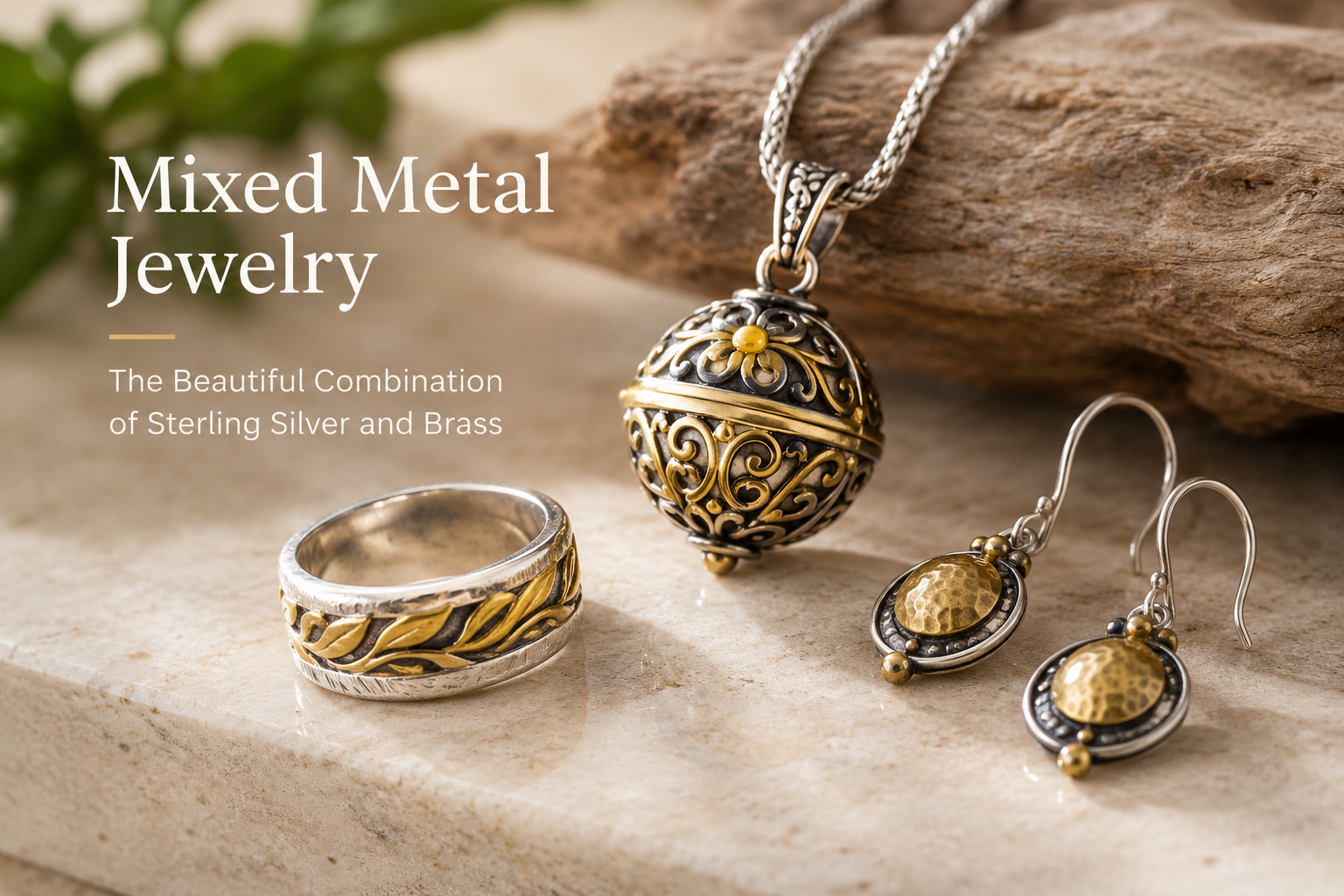
Jewelry does not always have to be made from a single metal. Sometimes, combining two different materials creates a more interesting design than using either metal alone.
One of our favorite combinations is sterling silver and brass.
The bright, cool appearance of silver contrasts beautifully with the warm, golden tone of brass. Together, these metals create distinctive jewelry that combines traditional craftsmanship with contemporary design.
At Puri Lautan Mutiara, a Bali-based jewelry manufacturer established in 1998, we have experience producing jewelry using both materials, including designs that incorporate silver and brass within the same piece.
In this article, we explore what makes mixed metal jewelry special, how it is manufactured, and why it can be an interesting option for jewelry designers and brands.
What Is Mixed Metal Jewelry?
Mixed metal jewelry refers to jewelry made using two or more different metals within a single design.
Common combinations include sterling silver and brass, silver and copper, silver and gold, or different metal finishes that create a two-tone appearance.
For example, a pendant may feature a sterling silver base decorated with brass ornaments, while a ring might combine a silver band with a contrasting brass detail.
The purpose is not simply to reduce material costs. Combining metals allows designers to introduce color, contrast, texture, and visual depth without relying entirely on gemstones or additional decorative materials.
Why Combine Sterling Silver and Brass?
Sterling silver and brass are particularly attractive together because their natural colors complement each other.
Sterling silver contains 92.5% pure silver and has a bright, cool metallic appearance.
Brass is primarily an alloy of copper and zinc, typically featuring a warmer yellow or golden color.
When these materials are combined, they create a two-tone effect that can highlight different elements of the design.
There are several advantages to this combination.
1. Natural Color Contrast
The difference between silver and brass creates visual interest. Brass ornaments can stand out against a silver background, making patterns and decorative details more noticeable.
2. Greater Design Flexibility
Designers can experiment with different proportions of silver and brass. A predominantly silver piece with small brass accents creates a subtle effect, while larger contrasting sections produce a bolder appearance.
3. Alternative Material Costs
Brass is generally less expensive than sterling silver. Depending on the design, replacing selected silver components with brass may help manage manufacturing costs without sacrificing the intended visual effect.
4. Traditional and Contemporary Appeal
Silver and brass can be combined in traditional Balinese jewelry, vintage-inspired pieces, minimalist collections, and contemporary statement jewelry.
Traditional Bali Jewelry and Mixed Metal Designs
Bali has a long tradition of decorative metalworking, particularly in areas such as Celuk and Singapadu.
Balinese silversmiths are known for their detailed ornamental patterns, handmade textures, and traditional metal fabrication techniques.
Combining silver and brass offers another way to emphasize these details.
For example, brass decorations can be soldered or mechanically attached to a silver surface, creating a warm contrast against the surrounding metal.
Oxidized silver may also be used to darken recessed areas, making the brass ornaments appear more prominent.
The result can be a piece that feels both traditional and contemporary.
Our Experience: Silver and Brass Dream Ball Jewelry
One example of mixed metal jewelry in our production history is the traditional Bali Dream Ball, sometimes known as a harmony ball.
These pendants can feature a combination of sterling silver and brass, with ornamental patterns decorating the outer surface.
In selected designs, brass decorative elements are soldered onto the silver construction, creating a distinctive two-tone appearance.
The contrast between the metals emphasizes the handcrafted details and gives the pendant its characteristic appearance.
This type of jewelry demonstrates that combining metals can be more than a fashion trend. It can also be part of a traditional manufacturing approach.
Product example: Silver and Brass Bali Dream Ball Pendant
How Is Mixed Metal Jewelry Manufactured?
Manufacturing mixed metal jewelry requires careful planning because different metals have different physical and working properties.
At the design stage, the manufacturer must determine how the materials will be connected and how each component will be finished.
Design and Material Selection
The process begins with deciding which sections will be made from sterling silver and which will use brass.
The choice depends on the intended appearance, structural requirements, budget, and how the jewelry will be worn.
Fabrication and Casting
Depending on the design, silver and brass components may be manufactured separately using hand fabrication or lost-wax casting.
Producing the components separately can provide greater control over their dimensions and surface details.
Soldering and Assembly
The components are then joined using an appropriate technique.
Soldering silver and brass requires suitable solder, flux, and careful temperature control.
Because the metals respond differently to heat, the construction must be planned to avoid damaging delicate details or previously completed joints.
Some designs may use mechanical connections instead of soldering.
Finishing and Polishing
After assembly, the jewelry is filed, sanded, and polished.
Different finishing techniques can be used to emphasize the contrast between the metals.
For example, polished silver with lightly textured brass creates a different appearance from oxidized silver with bright brass accents.
The final finish should be established during sample development to ensure consistency in production.
Does Mixed Metal Jewelry Tarnish?
Yes. Both sterling silver and brass can tarnish over time.
Sterling silver commonly develops tarnish through reactions with sulfur-containing substances in its environment.
Brass can also oxidize and gradually develop a darker surface patina.
This is a natural characteristic of these metals and does not automatically indicate poor manufacturing quality.
However, mixed metal jewelry requires appropriate care because cleaning methods suitable for one material may not be appropriate for the other.
We recommend gently cleaning jewelry with a soft cloth, avoiding harsh chemicals, and storing it in a dry environment.
Jewelry with oxidation, plating, gemstones, or delicate decorative details may require additional care.
Is Mixed Metal Jewelry Suitable for Sensitive Skin?
The suitability of mixed metal jewelry depends on the actual alloy composition, surface finish, and the parts that come into contact with the skin.
For earrings, the material used for earwires and posts is particularly important.
At Puri Lautan Mutiara, we can review designs using brass components with sterling silver earwires or posts where appropriate.
We also offer nickel-free brass options for suitable projects.
However, no metal should automatically be described as completely hypoallergenic for every wearer. Material specifications and destination-market requirements should always be considered during product development.
Mixed Metal Jewelry for Modern Jewelry Brands
For independent jewelry designers and established brands, mixed metal jewelry offers opportunities to develop distinctive collections.
A collection might include sterling silver rings with brass accents, two-tone pendants, textured earrings, or bracelets featuring contrasting metal components.
Mixed metal designs can also help connect different jewelry styles within a single collection.
For example, a customer who normally wears silver jewelry may find it easier to introduce warmer gold-toned accessories through a two-tone piece.
From a manufacturing perspective, the important considerations include construction, durability, material compatibility, and consistent finishing.
A successful mixed metal design should look intentional rather than simply assembled from different materials.
Custom Mixed Metal Jewelry Manufacturing in Bali
At Puri Lautan Mutiara, we work with international jewelry designers, retailers, and brands to develop custom jewelry collections.
Our manufacturing capabilities include sterling silver, brass, and selected other metals, depending on the design and production requirements.
If you are considering a collection combining silver and brass, we can review your sketches, technical drawings, CAD files, or physical samples to determine a practical manufacturing approach.
We can also discuss material selection, production methods, surface finishes, and sampling requirements before proceeding with manufacturing.
For more information about available materials, visit our Materials and Components page.
Final Thoughts
Mixed metal jewelry demonstrates that beautiful jewelry does not always require expensive gemstones or a single precious metal.
The combination of sterling silver and brass creates natural contrast, offers greater design flexibility, and allows traditional craftsmanship to be expressed in new ways.
Whether used in a traditional Bali Dream Ball pendant or a contemporary jewelry collection, these two materials can complement each other beautifully.
For designers and jewelry brands, the key is choosing the right construction, proportions, and finishing techniques.
Interested in developing your own mixed metal jewelry collection?
Contact Puri Lautan Mutiara to discuss your designs and manufacturing requirements.
Puri Lautan Mutiara — Custom Jewelry Manufacturing in Bali Since 1998.