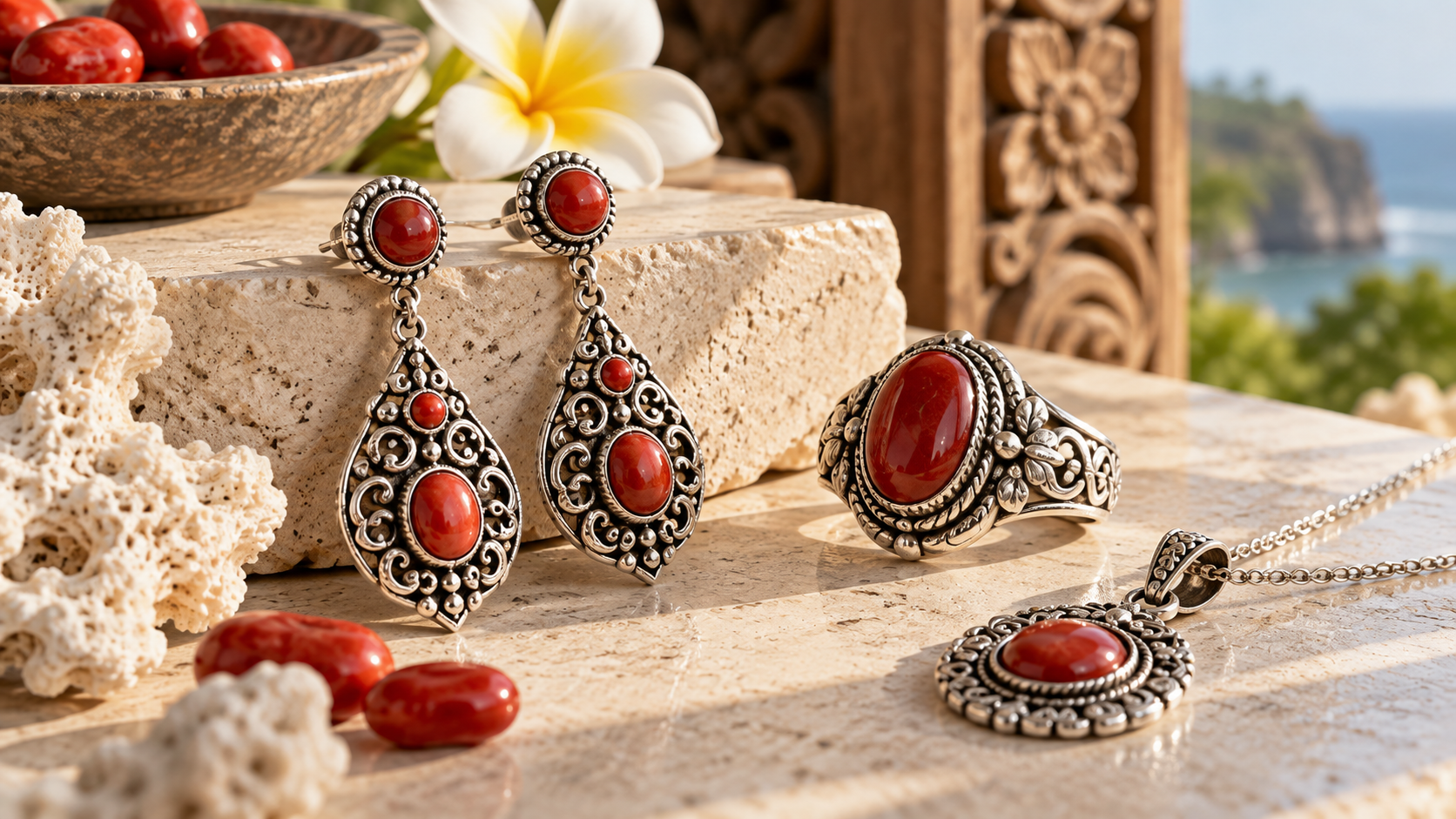
Coral jewelry has fascinated people for thousands of years. Its distinctive colors, organic textures, and historical significance have made it a popular material in decorative arts and personal adornment.
From ancient Mediterranean ornaments to contemporary sterling silver jewelry, coral has remained an important source of inspiration for jewelry designers.
In Bali, skilled silversmiths combine traditional metalworking techniques with colorful stones and decorative materials to create jewelry that reflects the island’s artistic heritage.
Today, Bali coral jewelry brings together historical inspiration, intricate silver craftsmanship, and modern design.
However, not every red stone or coral-like material used in jewelry comes from the same source. Understanding these differences helps customers make informed choices.
The Ancient History of Coral Jewelry
Coral has a long history in jewelry and decorative objects.
Ancient Mediterranean civilizations valued red coral for its appearance and symbolic significance. Historical records describe coral trading between Mediterranean communities and regions of Asia, including India.
The Roman author Pliny the Elder discussed coral and its popularity in ancient trade.
In several cultures, people associated coral with protection, prosperity, and spiritual significance. Some believed that wearing coral could protect against misfortune or illness.
These beliefs form part of coral’s cultural history, although modern scientific evidence does not support claims that coral jewelry provides supernatural protection or medical benefits.
Over time, craftspeople developed new techniques for carving, polishing, and incorporating coral into necklaces, earrings, bracelets, and ceremonial ornaments.
What Is Precious Coral?
Precious coral refers to certain coral species valued for their dense, polishable skeletons and attractive colors.
Some well-known precious corals belong to the genus Corallium and related genera.
Their colors range from pale pink and orange to deep red.
Unlike mineral gemstones, coral is an organic gem material produced by marine animals.
Precious coral grows slowly, and some populations face significant pressure from harvesting and environmental changes.
For this reason, responsible sourcing and accurate identification are especially important when purchasing coral jewelry.
Coral Jewelry in Bali
Bali has a long tradition of jewelry craftsmanship, particularly in the silverworking communities of Gianyar.
Balinese silversmiths use techniques such as hand fabrication, wax carving, lost-wax casting, soldering, and decorative finishing.
These skills allow craftspeople to combine sterling silver with colorful stones and other materials.
Red coral and coral-inspired materials create an attractive contrast with polished or oxidized silver.
Traditional Balinese jewelry often features ornamental details, floral patterns, scrollwork, and textured surfaces.
Modern designs may use simpler settings and cleaner shapes while retaining elements of traditional craftsmanship.
Natural Coral vs Coral-Inspired Jewelry Materials
One important distinction concerns the material used in the jewelry.
Not every product described commercially as coral jewelry contains untreated natural precious coral.
Different materials can create a similar appearance.
Natural Precious Coral
Natural precious coral comes from specific marine coral species.
Its value depends on species, color, quality, size, condition, and provenance.
Buyers should request accurate species identification and sourcing documentation where appropriate.
Dyed or Treated Coral
Some coral materials undergo dyeing, stabilization, or other treatments to improve their appearance.
Sellers should disclose relevant treatments rather than presenting treated materials as untreated natural coral.
Reconstituted or Composite Materials
Manufacturers may produce decorative components using crushed material, binders, or other composite processes.
These materials differ from solid natural precious coral and should be identified accurately.
Coral-Look Alternatives
Glass, resin, ceramic, shell, and other materials can imitate coral’s distinctive colors.
Such alternatives allow designers to achieve a similar visual effect without necessarily using precious coral.
However, environmental claims about these alternatives depend on the materials and production methods involved.
The most important consideration is transparency: Buyers should know exactly what material they are purchasing.
Why Coral Colors Work Beautifully with Sterling Silver
Red and orange tones create a striking contrast against the cool appearance of sterling silver.
This combination works especially well in jewelry featuring traditional Balinese patterns.
Coral-Style Earrings
Sterling silver earrings can feature round beads, cabochons, or decorative red elements.
Artisans may combine these materials with floral details, silver scrollwork, or simple modern settings.
Coral-Style Pendants
Pendants provide an attractive way to showcase a colorful centerpiece.
Designers can choose minimalist bezel settings or more elaborate Balinese-inspired designs.
Rings with Red Stones
A red centerpiece can create a strong visual focal point in a sterling silver ring.
Oxidized silver details often emphasize the contrast between the setting and the stone.
Matching Jewelry Collections
Designers can develop coordinated earrings, pendants, rings, and bracelets using consistent shapes and decorative motifs.
This approach can be particularly useful for jewelry brands creating themed collections.
Is Bali Coral Jewelry More Affordable Than Precious Coral?
The price depends primarily on the actual materials, craftsmanship, and production method.
High-quality natural precious coral can be expensive, especially when its species, color, size, and provenance contribute to its value.
By contrast, jewelry made with dyed, composite, or coral-look materials may be more affordable.
However, it would be misleading to describe all Bali coral jewelry as a cheap version of precious coral.
Bali describes the jewelry’s geographic or manufacturing connection, not a particular coral species or quality grade.
The craftsmanship itself also contributes to the value of the finished product.
A detailed sterling silver setting may require considerable skill and production time regardless of the centerpiece material.
Responsible Sourcing and Coral Conservation
Coral ecosystems play an important role in marine biodiversity.
Some coral species face threats from climate change, habitat degradation, and unsustainable harvesting.
International trade rules also differ between coral species.
Certain corals are subject to CITES controls, while other species may fall under different national or regional regulations.
Importers and jewelry brands should verify the scientific name, origin, applicable trade restrictions, and documentation requirements before purchasing natural coral.
Importantly, a supplier’s description of a material as simply “coral” may not provide enough information to determine its legal status.
At the design stage, buyers may also consider alternative decorative materials when the provenance of natural coral cannot be established.
How to Choose Quality Coral Jewelry
When purchasing coral jewelry, consider the following factors.
1. Confirm the Material
Ask whether the centerpiece contains natural coral, treated coral, composite material, or an imitation.
2. Check the Silver Purity
Sterling silver should contain 92.5% silver by mass.
A 925 stamp indicates a purity claim but does not independently guarantee the composition.
3. Examine the Craftsmanship
Inspect solder joints, stone settings, polishing, symmetry, and finishing quality.
4. Review the Dimensions
Check the product’s dimensions and estimated weight rather than relying only on photographs.
5. Ask About Care Instructions
Coral and some coral-like materials can be sensitive to chemicals, abrasion, heat, or prolonged exposure to sunlight.
Cleaning recommendations should match the actual material.
6. Consider Import Requirements
For international purchases, confirm whether the material requires additional documentation or faces import restrictions.
Custom Coral-Inspired Jewelry Manufacturing in Bali
For jewelry brands and designers, Bali offers opportunities to combine traditional craftsmanship with custom manufacturing.
At PT Puri Lautan Mutiara (PLM Bali), we have produced jewelry since 1998.
Our workshop specializes in sterling silver, brass, and gold jewelry, including designs that incorporate gemstones and decorative materials.
We offer manufacturing services such as:
- Custom jewelry development from sketches or reference images
- Hand-carved wax models and CAD design support
- Lost-wax casting and mold making
- Traditional Balinese decorative metalwork
- Gemstone setting and jewelry assembly
- Polishing, oxidizing, and plating
- Small-batch OEM and ODM production
For coral-inspired collections, we can discuss suitable decorative materials based on design requirements and material availability.
We do not assume that all red stones or coral-like components are natural precious coral. Material identification and sourcing requirements should be confirmed before production.
Our typical minimum order quantity starts at approximately 5–10 pieces per design or size, depending on manufacturing complexity.
Frequently Asked Questions About Bali Coral Jewelry
Is Bali coral the same as Mediterranean precious coral?
Not necessarily. The term “Bali coral jewelry” may describe jewelry made or designed in Bali. It does not establish the biological species or geographic origin of the coral material.
Is all red coral jewelry made from natural coral?
No. Red jewelry components may contain natural coral, treated coral, composite materials, glass, resin, or other alternatives.
Can coral jewelry be made with sterling silver?
Yes. Sterling silver provides an attractive setting for coral and coral-inspired materials.
Is natural coral jewelry legal to export?
Legality depends on the species, source, destination, and applicable regulations. Some materials require permits or additional documentation.
Can jewelry manufacturers create custom coral-inspired designs?
Yes. Manufacturers can develop designs using appropriate stones or decorative components, subject to material availability and sourcing requirements.
Conclusion
Coral jewelry connects ancient traditions with contemporary design.
Its distinctive colors have inspired craftspeople for centuries, while modern manufacturing techniques allow designers to create a wide variety of jewelry styles.
In Bali, sterling silver craftsmanship adds another dimension through detailed metalwork, traditional patterns, and custom production.
Whether choosing natural coral or a coral-inspired alternative, buyers should prioritize accurate material descriptions, responsible sourcing, and reliable craftsmanship.
For jewelry brands interested in developing custom sterling silver collections, our workshop welcomes design inquiries.
Contact PLM Bali for Custom Jewelry Manufacturing
PT Puri Lautan Mutiara — Bali Jewelry Manufacturer Since 1998.
-
←→
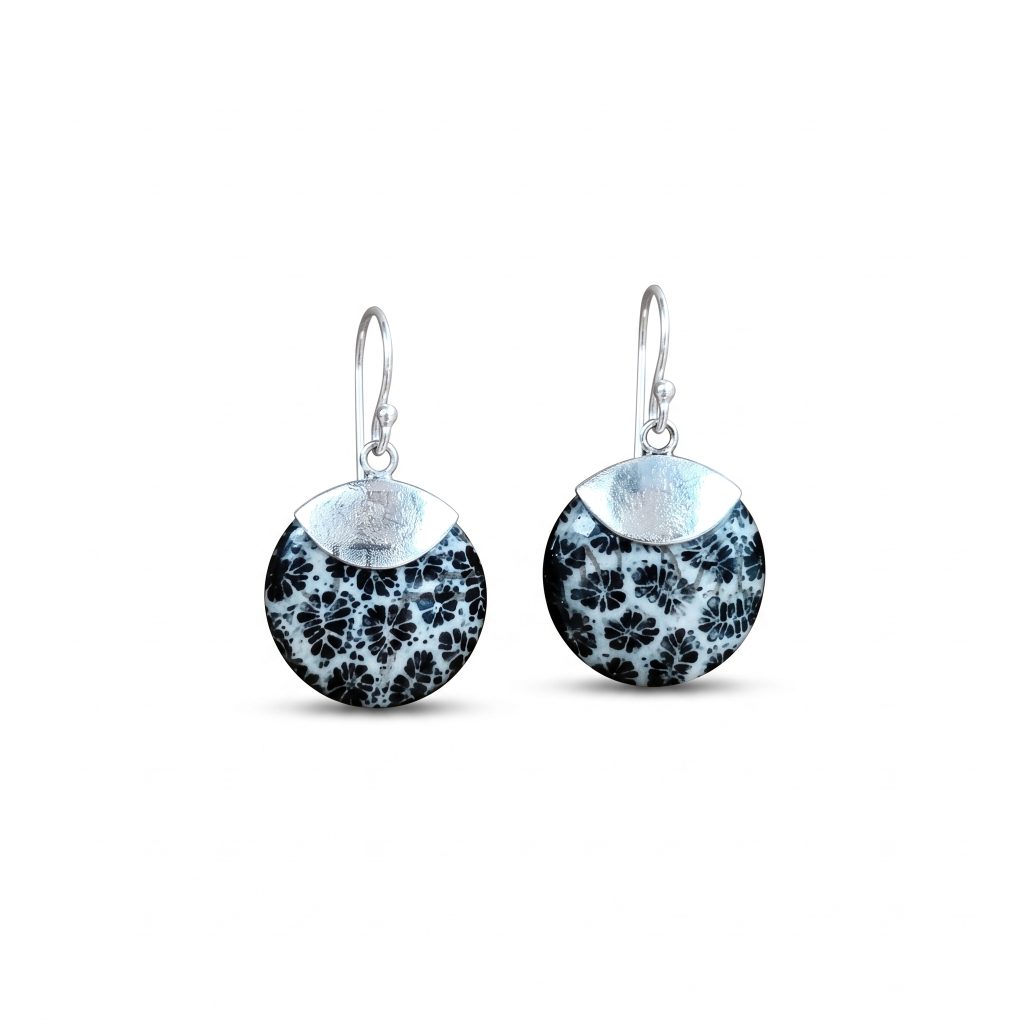
EA25448-Plain Caps Round Coral
USD $6.99Sterling silver plain silver caps with round coral stone- Buy 50 at USD $6.59
- Buy 100 at USD $5.99
- Buy 200 at USD $5.59
Maximum quantity exceededMinimum purchase amount of 10 is requiredMinimum purchase amount of 10 is requiredEA25448-Plain Caps Round Coral
As low as USD $5.59Successfully Added to your Shopping CartAdding to Cart... -
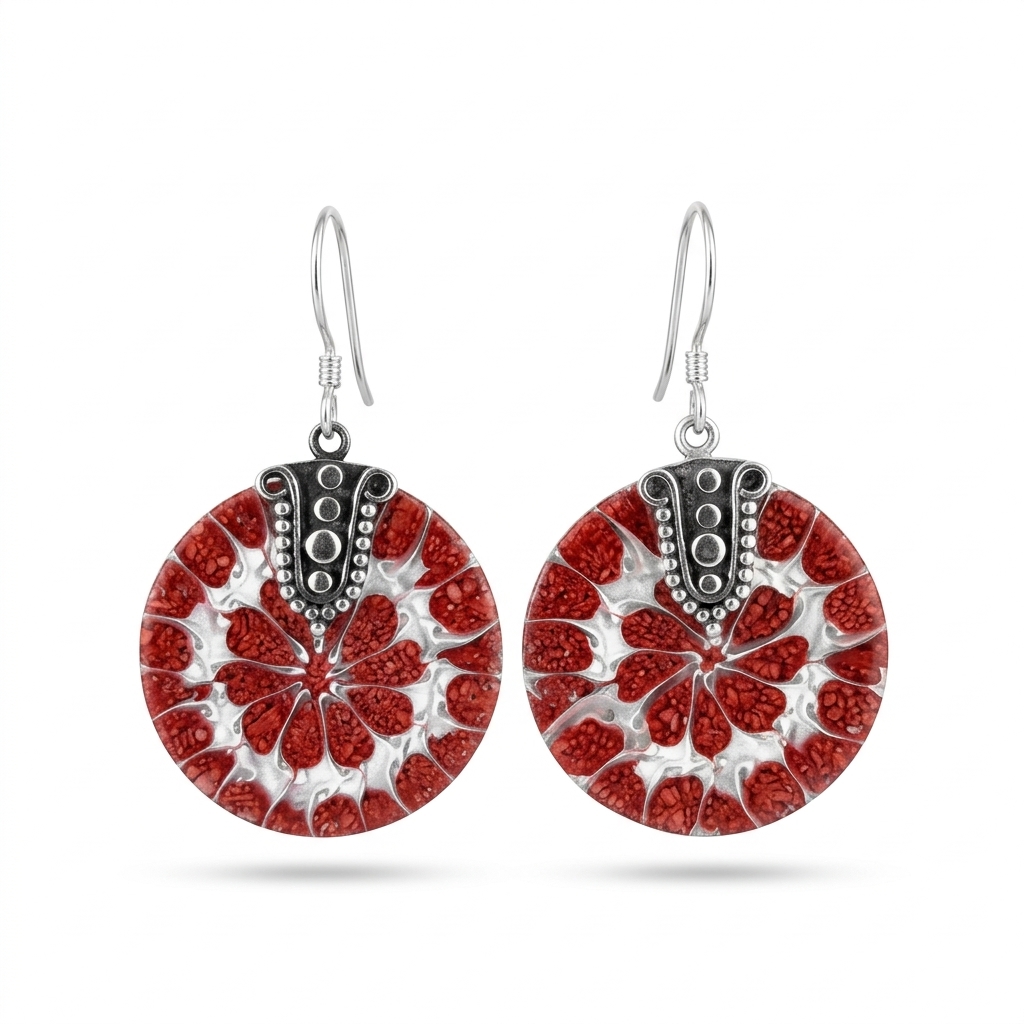
EUK-004-Sterling Silver Round Shell Dangle Earrings
USD $7.59These distinctive sterling silver earrings feature a bold round shell centerpiece with a naturally textured red pattern, complemented by an ornate Balinese-style silver accent at the top. The combination of organic shell character and oxidized silver detailing creates an eye-catching artisan look while maintaining a clean, balanced silhouette.
Finished with sterling silver French hooks, these earrings are designed as a versatile statement piece that highlights the beauty of natural shell and traditional Balinese silver craftsmanship.- Buy 50 at USD $6.99
- Buy 100 at USD $6.59
- Buy 200 at USD $5.99
Maximum quantity exceededMinimum purchase amount of 10 is requiredMinimum purchase amount of 10 is requiredEUK-004-Sterling Silver Round Shell Dangle Earrings
As low as USD $5.99Successfully Added to your Shopping CartAdding to Cart... -
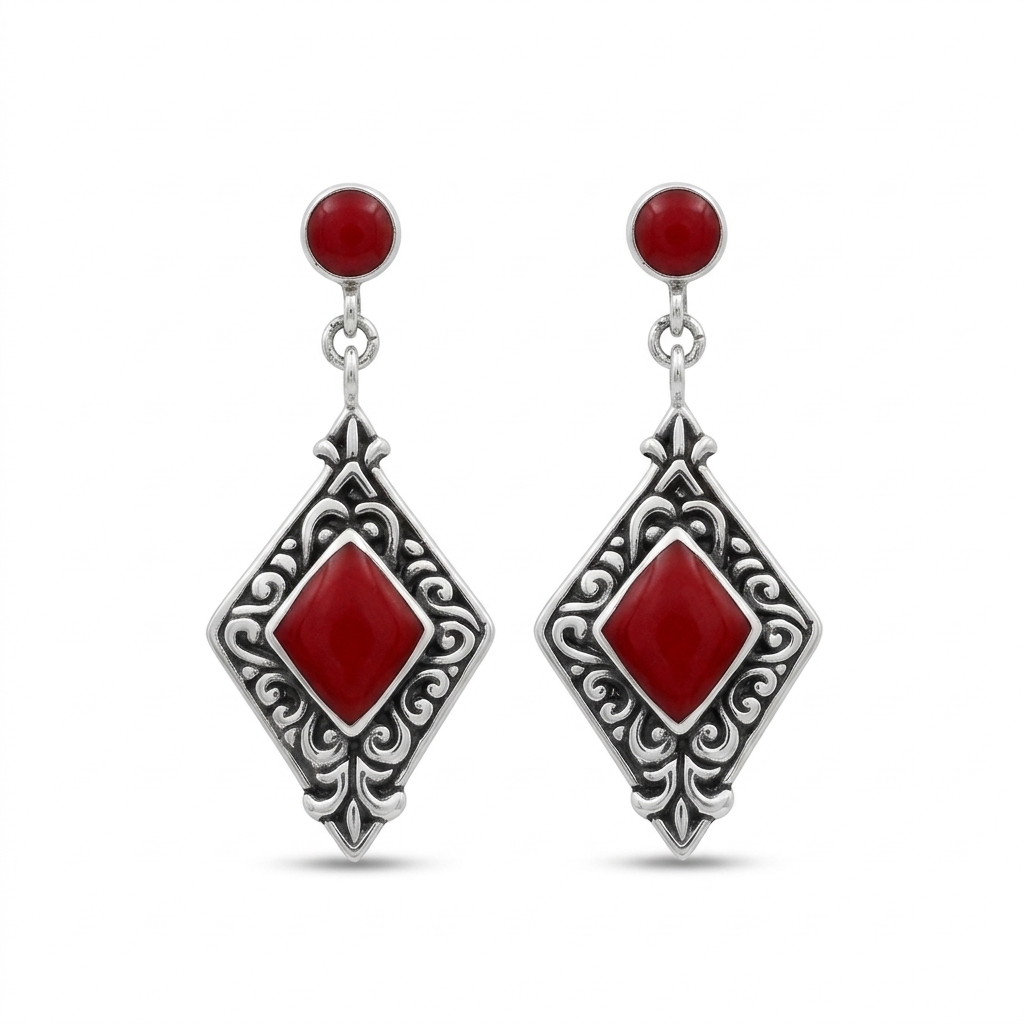
ER25002-Sterling Silver Balinese Diamond-Shaped Coral Dangle Stud Earrings
USD $24.99These elegant sterling silver coral dangle earrings feature a distinctive diamond-shaped design inspired by traditional Balinese jewelry craftsmanship. Combining vibrant red coral stones with intricate silver scrollwork, these earrings offer a beautiful balance of geometric elegance and traditional ornamental artistry.
Made To Order- Buy 50 at USD $23.99
- Buy 100 at USD $22.99
- Buy 200 at USD $21.99
Maximum quantity exceededMinimum purchase amount of 5 is requiredMinimum purchase amount of 5 is requiredER25002-Sterling Silver Balinese Diamond-Shaped Coral Dangle Stud Earrings
As low as USD $21.99Successfully Added to your Shopping CartAdding to Cart... -
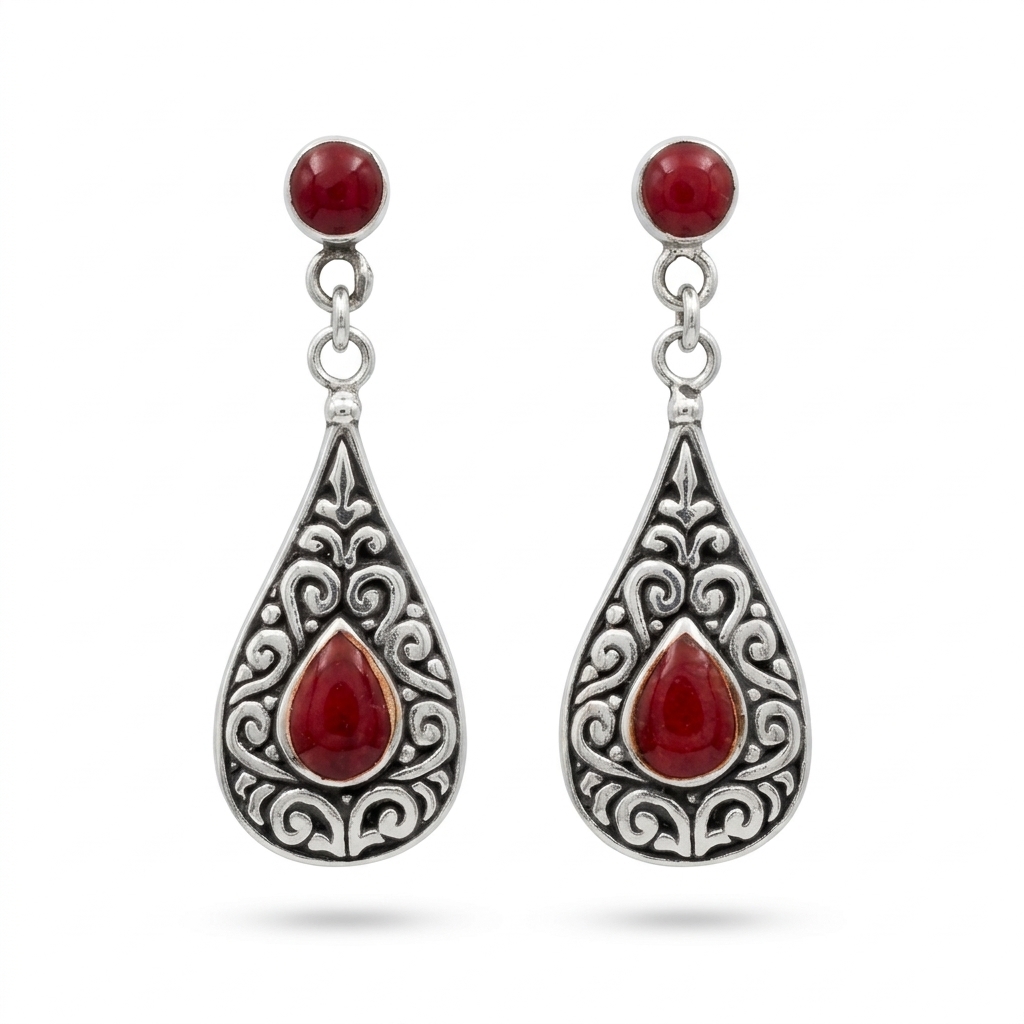
ER25001-Sterling Silver Balinese Coral Teardrop Dangle Stud Earrings
USD $24.99These beautiful sterling silver coral dangle earrings showcase traditional Balinese jewelry craftsmanship, combining intricate silver scrollwork with the rich red tones of coral stones. Featuring an elegant teardrop silhouette, each earring is decorated with ornate floral-inspired patterns that reflect the artistry of Balinese silversmithing.
Made To Order- Buy 50 at USD $23.99
- Buy 100 at USD $22.99
- Buy 200 at USD $21.99
Maximum quantity exceededMinimum purchase amount of 5 is requiredMinimum purchase amount of 5 is requiredER25001-Sterling Silver Balinese Coral Teardrop Dangle Stud Earrings
As low as USD $21.99Successfully Added to your Shopping CartAdding to Cart...