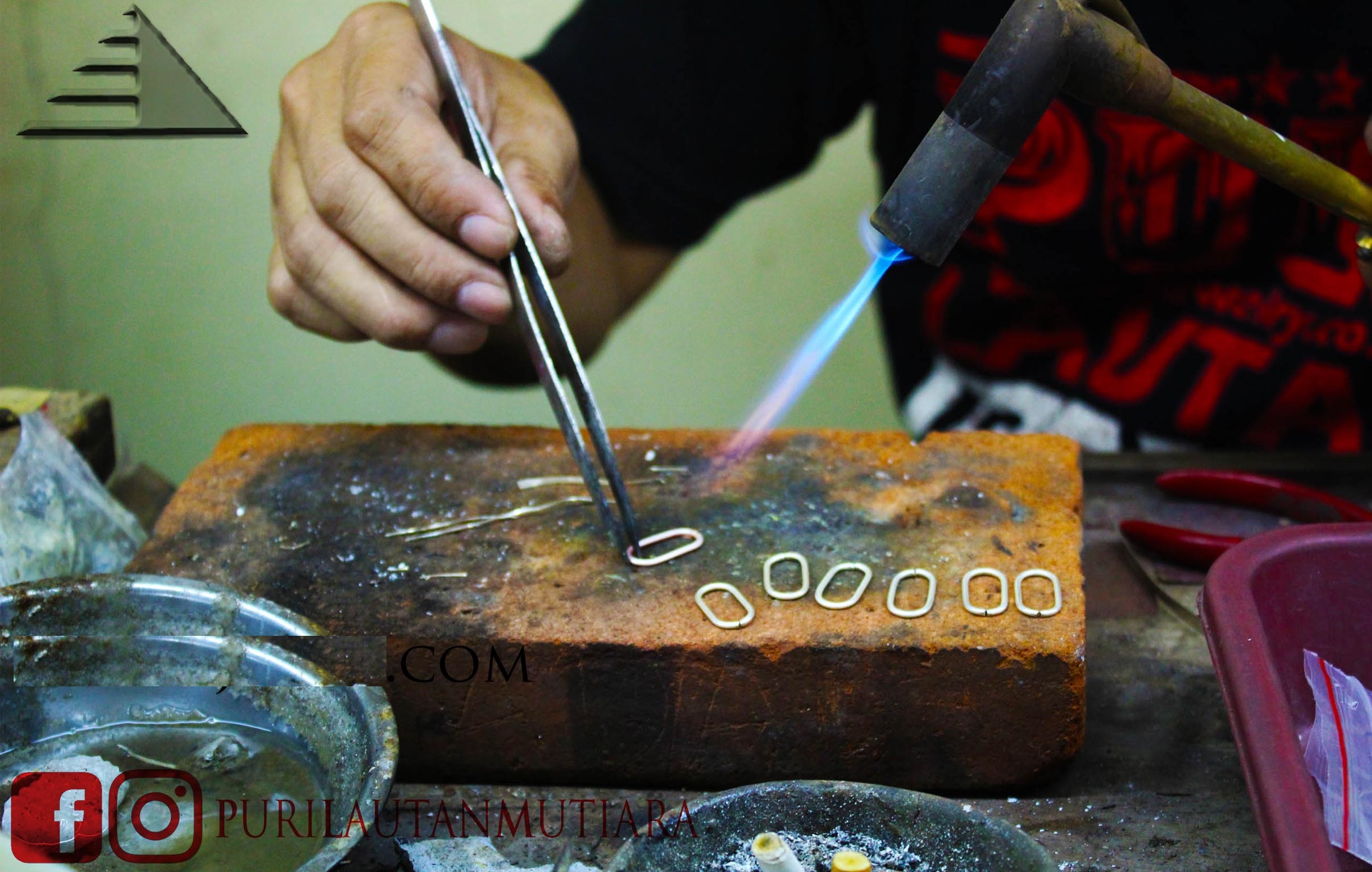
Behind every piece of handcrafted silver jewelry is a process that customers rarely see.
A beautifully polished ring may begin as a simple piece of silver wire, a carved wax model, or a digital design. Before it reaches a jewelry store, it passes through several stages of production, each requiring technical knowledge, patience, and attention to detail.
In Bali, silversmithing is more than a manufacturing activity. It is a craft connected to local communities, family businesses, and generations of accumulated experience.
Villages such as Celuk and neighboring areas in Gianyar have become well known for silver jewelry production. Their workshops range from small family operations to businesses supplying international jewelry designers and brands.
But what does a typical working day actually look like for a Bali silversmith?
And how is this traditional profession adapting to modern jewelry manufacturing?
Let’s take a closer look at the people, skills, and challenges behind Bali’s silver jewelry industry.
The Heritage of Balinese Silversmithing
Bali has a long tradition of metalworking associated with religious objects, ceremonial accessories, decorative items, and personal jewelry.
Celuk Village in Gianyar is particularly recognized for its silver and gold craftsmanship.
Historical accounts of Celuk’s silversmithing development describe how local artisans gradually expanded their work from ceremonial objects and traditional accessories into a wider range of jewelry products.
As the industry developed, skills were passed between family members, apprentices, and experienced craftspeople.
These skills included metal shaping, soldering, decorative engraving, and the creation of intricate patterns.
Today, Balinese silversmithing continues to evolve.
Traditional decorative techniques remain important, but many workshops also manufacture contemporary jewelry for customers in international markets.
This combination of heritage and adaptation is one of the distinctive characteristics of Bali’s jewelry industry.
Starting the Day in a Bali Jewelry Workshop
A silversmith’s working day varies depending on the workshop, production schedule, and type of jewelry being made.
Some artisans specialize in particular techniques, while others perform several different tasks.
A typical day may begin with checking unfinished orders, preparing tools, reviewing designs, and organizing materials.
Before production starts, the silversmith needs to understand the requirements of each item.
For example, a ring order may specify:
- Sterling silver 925.
- A particular ring size.
- Exact dimensions and estimated weight.
- Gemstone type and size.
- Surface finishing requirements.
- Engraving or decorative details.
- Approved sample or reference photographs.
Even a small misunderstanding can affect the finished product.
For this reason, experienced silversmiths do more than work with metal. They also interpret drawings, recognize construction problems, and make practical decisions throughout production.
1. Preparing Silver and Understanding the Design
The first stage depends on the manufacturing method.
For handmade jewelry, an artisan may begin with silver sheet, wire, or other prepared metal components.
For cast jewelry, production may begin with a wax model or a pattern created through CAD and 3D printing.
Sterling silver contains 92.5% silver, with the remaining 7.5% consisting of other metals, commonly copper.
The alloy provides greater hardness and strength than pure silver, making it suitable for many types of jewelry.
Before beginning work, the artisan must consider how the material will behave during shaping, soldering, casting, and finishing.
A design that looks attractive on paper may require changes to improve durability or make production practical.
This is where manufacturing experience becomes especially valuable.
2. Shaping, Cutting, and Soldering
In traditional hand fabrication, silversmiths use tools such as saws, files, pliers, hammers, mandrels, and torches.
Silver sheet may be cut into decorative shapes.
Wire may be bent into rings, loops, or ornamental patterns.
Separate components are joined using appropriate soldering techniques.
These operations require careful control.
Too much heat can damage delicate components, while inaccurate alignment may affect the appearance or strength of the finished jewelry.
For example, producing a simple silver ring involves more than joining the ends of a metal band.
The artisan must consider the ring’s shape, dimensions, solder joint, surface finish, and comfort when worn.
Complex designs may involve many individual components that must be assembled in the correct sequence.
The work can be repetitive, but precision is essential.
3. Traditional Balinese Decorative Techniques
One of the most recognizable characteristics of Balinese silver jewelry is its decorative metalwork.
Traditional techniques can create patterns that are difficult to reproduce convincingly through simple surface decoration alone.
Granulation
Granulation uses small metal spheres arranged into decorative patterns.
These tiny details may be incorporated into rings, pendants, earrings, and other ornamental designs.
The process requires accurate positioning and suitable joining techniques.
Filigree
Filigree involves arranging fine metal wires into delicate decorative forms.
Depending on the design, these wires may create spirals, curves, or lace-like patterns.
Engraving and Texturing
Hand engraving, chasing, stamping, and other texturing methods can add depth and character to a metal surface.
These techniques allow artisans to create patterns that reflect both traditional influences and contemporary design ideas.
Oxidized Finishing
Oxidation is often used to darken recessed areas of silver jewelry.
When raised surfaces are polished, the contrast emphasizes carved or decorative details.
This finish is particularly effective for intricate Balinese-style jewelry.
Not every workshop uses all these techniques, and not every piece of Bali-made jewelry features traditional ornamentation.
The appropriate technique depends on the design and the skills available.
4. Lost-Wax Casting: An Important Part of Modern Production
Although Bali is known for handmade silver jewelry, casting is also an important manufacturing method.
Lost-wax casting allows manufacturers to reproduce complex shapes from an original model.
The process generally includes creating a master model, producing wax patterns, assembling a casting tree, investing the patterns, removing the wax, and casting molten metal into the resulting cavities.
After casting, individual pieces are separated and prepared for further work.
Casting is particularly useful for jewelry designs that require repeatable shapes or quantities.
However, a cast item is not necessarily a finished product.
It may still require extensive filing, soldering, stone setting, polishing, and inspection.
A skilled artisan remains important throughout these stages.
Modern casting and traditional handwork are therefore not competing methods. They can complement each other.
5. Stone Setting and Assembly
Many jewelry designs incorporate gemstones, pearls, mother-of-pearl, or other decorative materials.
Setting these materials requires specialized knowledge.
The setter must understand the stone’s dimensions, shape, and physical characteristics.
A gemstone setting must hold the stone securely without creating unnecessary stress or damage.
Different setting methods may include bezel, prong, flush, or other constructions.
Some stones are more delicate than others and require special handling.
Pearls, for example, are generally attached after operations involving significant heat or aggressive polishing have been completed.
For earrings, bracelets, and necklaces, assembly may also involve earwires, posts, hinges, jump rings, clasps, or other components.
Small details can make a significant difference to the customer’s experience.
A bracelet clasp that opens too easily or an earring that is uncomfortable to wear can affect the perceived quality of an otherwise beautiful design.
6. Polishing and Finishing: Where Details Become Visible
Polishing is one of the final stages of jewelry production, but it should never be treated as an unimportant task.
The finish influences how customers perceive the entire piece.
A high-polish surface can emphasize smooth curves and reflect light.
A brushed or satin finish creates a softer appearance.
Oxidized finishing highlights recessed details.
Some jewelry combines several finishes to achieve a particular effect.
Before polishing, the artisan may need to remove casting marks, refine solder joints, smooth edges, and correct surface imperfections.
Careful finishing requires judgment.
Excessive polishing can soften decorative details or change dimensions.
Insufficient finishing may leave scratches, rough surfaces, or visible production marks.
For intricate Balinese jewelry, preserving the original decorative details is particularly important.
7. Quality Control Before Jewelry Leaves the Workshop
Once a piece is completed, it should be checked against the agreed specifications.
Quality control may include verifying dimensions, weight, ring size, stone security, finishing, and the operation of moving components.
For international manufacturing orders, consistency between pieces is important.
A customer ordering multiple rings or earrings expects the products to follow the approved design, allowing for reasonable manufacturing tolerances.
Common inspection points include:
- Surface quality and polishing.
- Solder joints and assembly.
- Gemstone alignment and security.
- Clasp and hinge operation.
- Sharp edges or uncomfortable surfaces.
- Product dimensions and specifications.
- Overall appearance compared with the approved sample.
Quality control is not simply about finding defects at the end.
Clear specifications, experienced workers, and appropriate checks during production can help prevent problems before the final inspection.
The Human Skills Behind Jewelry Manufacturing
Modern equipment can improve efficiency, but jewelry manufacturing still relies heavily on human judgment.
A machine may produce a precise wax model, but someone must determine whether the design is suitable for casting.
A casting process may reproduce a shape, but an experienced worker must recognize imperfections and prepare the surface correctly.
A polishing machine can help achieve a consistent finish, but it cannot independently decide which decorative details should be preserved.
These decisions come from experience.
For this reason, training new workers is one of the most important challenges facing jewelry workshops.
Some skills can be introduced relatively quickly.
Others require years of practice before a worker can consistently handle complex designs.
Experienced artisans contribute not only through the pieces they make, but also through the knowledge they pass on.
The Challenges Facing Bali’s Silversmiths
Despite Bali’s reputation for craftsmanship, the industry faces several challenges.
These do not affect every artisan or workshop equally, but they influence the long-term development of the sector.
Competition from Mass Production
Jewelry manufacturers around the world can produce large quantities using increasingly efficient processes.
This creates strong price competition.
Small workshops may struggle to compete when customers compare products primarily by price rather than craftsmanship, construction, or service.
Fluctuating Material Prices
Changes in silver and gold prices can affect manufacturing costs and the retail prices of finished jewelry.
For workshops operating on narrow margins, material price fluctuations can complicate quotations and production planning.
Demand and Order Uncertainty
Custom jewelry manufacturers may experience periods of strong demand followed by quieter months.
Unpredictable orders make workforce planning and investment more difficult.
Attracting Younger Workers
Younger generations have opportunities in tourism, technology, hospitality, and other industries.
Silversmithing must compete with these career options.
Learning jewelry manufacturing requires patience, and the financial rewards may not be immediate.
For the profession to remain attractive, businesses need to create opportunities for skill development and sustainable employment.
Maintaining Traditional Skills
As experienced artisans retire, specialized techniques can become harder to preserve if younger workers do not learn them.
This challenge is particularly important for detailed decorative work that depends on practical experience.
How Technology Is Changing the Silversmith’s Working Day
Modern jewelry production increasingly uses digital tools.
CAD software allows designers and manufacturers to communicate complex shapes and dimensions.
3D printing can support model development and casting preparation.
Laser engraving and other specialized equipment may be used for selected production tasks.
Digital inventory systems and production tracking can also help workshops organize materials and orders.
These technologies offer opportunities to improve accuracy and efficiency.
However, their usefulness depends on how they are implemented.
A poorly designed CAD model can still create manufacturing problems.
A digital production system cannot compensate for unclear specifications or insufficient quality control.
The most effective approach is to combine appropriate technology with experienced craftsmanship.
For Bali’s silversmiths, learning modern techniques can expand career opportunities while preserving valuable traditional skills.
Why Handmade Craftsmanship Still Matters
In a market filled with mass-produced products, handmade craftsmanship offers something distinctive.
It reflects technical knowledge, attention to detail, and the decisions made by the person creating the jewelry.
However, the term handmade should be used accurately.
A fully hand-fabricated piece is different from a cast piece that has been assembled and finished by hand.
Both methods can produce excellent jewelry.
What matters is that manufacturers and brands communicate honestly about the processes used.
For some designs, traditional hand fabrication is the most appropriate method.
For others, casting combined with skilled hand finishing provides a practical balance between design detail, consistency, and production cost.
Recognizing the value of both approaches supports a more realistic understanding of modern Balinese jewelry manufacturing.
The Role of International Jewelry Brands
International jewelry designers, retailers, and wholesalers can play an important role in supporting skilled manufacturing in Bali.
Long-term business relationships can provide workshops with opportunities to develop capabilities, improve production planning, and invest in workers.
However, successful cooperation requires realistic expectations from both sides.
Buyers should provide clear design specifications, communicate quality requirements, and allow appropriate time for sampling and production.
Manufacturers should offer accurate quotations, explain technical limitations, and maintain consistent communication.
A productive relationship is not simply about finding the lowest possible manufacturing price.
It is about creating jewelry that meets the intended design, quality, and commercial requirements.
When buyers and manufacturers work together effectively, both can benefit.
A Look Inside Puri Lautan Mutiara
At Puri Lautan Mutiara, we have been involved in jewelry manufacturing in Bali since 1998.
Our workshop is based in Singapadu, Gianyar, near the traditional jewelry-making area of Celuk.
We work with international jewelry designers, brands, retailers, and wholesalers on custom jewelry development and manufacturing.
Depending on the project, our production methods may include hand fabrication, wax modeling, lost-wax casting, CAD-assisted development, stone setting, assembly, and finishing.
We work with sterling silver, brass, selected gold alloys, and other suitable jewelry materials.
As a small manufacturing business, we understand that machinery alone does not determine product quality.
Experienced workers, clear instructions, careful supervision, and attention to finishing remain essential.
We also recognize the importance of transferring skills and adapting to changing manufacturing requirements.
Our goal is to combine the practical knowledge of Balinese jewelry-making with reliable production methods for international customers.
Learn more about our Custom Jewelry Manufacturing Services.
The Future of Bali’s Silversmiths
The future of Bali’s silver jewelry industry will depend on more than preserving traditional designs.
It will also depend on whether silversmithing remains a practical and attractive profession.
Workshops need opportunities to train younger workers, improve productivity, and develop sustainable customer relationships.
Artisans need to adapt to new materials, technologies, and design expectations without losing the specialized skills that make their work valuable.
International customers increasingly expect clear specifications, consistent quality, and dependable communication.
Meeting these expectations while maintaining craftsmanship is one of the industry’s central challenges.
The future may not look exactly like the past.
But traditional techniques can continue to have a place in contemporary jewelry manufacturing when they are supported by innovation, practical business management, and the next generation of skilled workers.
Final Thoughts: The People Behind Every Piece
A day in the life of a Bali silversmith involves much more than shaping silver into jewelry.
It includes interpreting designs, preparing materials, solving technical problems, assembling components, finishing surfaces, and checking quality.
Behind these activities are years of accumulated knowledge and experience.
Bali’s silversmithing heritage is worth preserving, but preservation should not mean resisting change.
The strongest future for the industry lies in combining traditional skills with modern manufacturing practices and creating meaningful opportunities for younger artisans.
Every finished piece of jewelry represents not only a design, but also the people and processes that made it possible.
Looking for a custom jewelry manufacturing partner in Bali?
Contact Puri Lautan Mutiara to discuss your jewelry designs, materials, sampling, and production requirements.
Puri Lautan Mutiara — Custom Jewelry Manufacturing in Bali Since 1998.