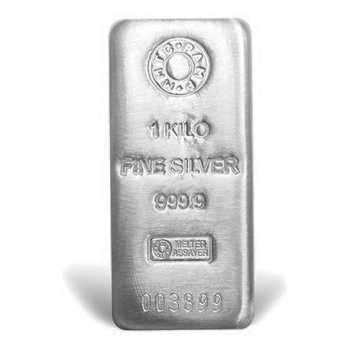
Silver Price Update — October 22, 2026
After a remarkable rally that pushed silver to historic highs earlier this year, the silver price has experienced a significant correction. For jewelry manufacturers, designers, and silver jewelry brands, this development raises an important question: Is silver finally becoming more affordable again?
The answer is yes, compared with the extraordinary price levels seen earlier in 2026. However, the reasons behind the decline are more complicated than simply weaker demand.
A combination of changing interest rate expectations, a stronger U.S. dollar, investor selling, and adjustments in industrial silver consumption has contributed to the recent downward pressure.
Let’s examine what is happening in the global silver market and what it means for the jewelry industry.
How Much Has the Silver Price Fallen?
According to the London Bullion Market Association (LBMA), silver experienced considerable volatility throughout 2026.
The LBMA’s third-quarter market report provides the following figures:
| Period | Silver Price (USD/oz) |
|---|---|
| January 29, 2026 high | $118.45 |
| July 17, 2026 low | $55.29 |
| August 28, 2026 high | $70.26 |
| September 30, 2026 | $60.73 |
| October 21, 2026 reported spot price | $57.50 |
These figures show just how dramatically the market has changed.
From the January peak to the reported October 21 price, silver had declined by more than 50%.
For businesses purchasing silver as a manufacturing material, such a significant movement can substantially affect production costs, quotations, and inventory decisions.
Sources: LBMA Precious Metals Market Report Q3 2026 and Newsmaker Silver Market Update, October 21.
Why Is the Silver Price Going Down?
Several economic and industrial factors are contributing to the recent decline.
1. A Stronger U.S. Dollar
Silver is traded internationally in U.S. dollars.
When the dollar strengthens, silver becomes more expensive for buyers using other currencies. This can reduce international demand and put downward pressure on the metal’s price.
On October 21, market reporting identified the recovering U.S. dollar as one of the factors weighing on silver.
For jewelry manufacturers outside the United States, including those in Bali, the exchange rate is particularly important.
Even when the international silver price falls, the savings in local currency may be smaller if the U.S. dollar strengthens against that currency.
Source: Silver Loses Momentum — October 21, 2026.
2. Higher Interest Rates Make Precious Metals Less Attractive
Another major influence on the silver price is U.S. monetary policy.
Unlike bonds or savings accounts, physical silver does not generate interest.
When interest rates and government bond yields rise, investors may prefer assets that offer regular returns.
Recent U.S. inflation figures have increased expectations that the Federal Reserve could maintain a restrictive monetary policy or raise interest rates further.
On October 14, Kitco reported that silver fell sharply as stronger-than-expected inflation data increased expectations of additional Federal Reserve tightening.
This illustrates how quickly monetary policy expectations can influence precious metal markets.
Source: Kitco — Silver Plunges as Inflation Boosts Fed Rate-Hike Bets.
3. Investors Are Taking Profits After an Extraordinary Rally
Silver experienced an exceptional price increase during 2025 and early 2026.
According to The Silver Institute, the metal reached an all-time high above $121 per ounce in January 2026 before declining sharply.
When an asset rises this quickly, some investors eventually decide to sell and secure their profits.
As selling pressure increases, prices can fall rapidly, particularly in a volatile market such as silver.
This does not necessarily mean that silver has lost its long-term value. It may simply reflect investors adjusting their positions after an unusually strong rally.
Source: The Silver Institute — Record Silver Prices and Market Conditions.
4. Industrial Manufacturers Are Trying to Use Less Silver
This is perhaps one of the most interesting developments.
Silver is not only a precious metal used in jewelry. It is also an important industrial material used in solar panels, electronics, electrical components, and other technologies.
However, when silver becomes extremely expensive, manufacturers have a strong incentive to reduce their consumption.
The LBMA’s third-quarter report noted that a leading Chinese solar panel producer had announced plans to replace some silver with copper in its products.
Other solar manufacturers have also explored ways to reduce silver consumption.
This development is important because industrial demand has been a major supporting factor for silver prices.
If manufacturers successfully reduce the amount of silver required per product, future demand growth could slow.
Source: LBMA — Precious Metals Market Report Q3 2026.
5. Physical Silver Market Conditions Have Improved
The silver market experienced significant supply and liquidity pressure during 2025.
Large movements of physical silver into exchange inventories, combined with investment demand, contributed to unusually tight market conditions.
However, according to Reuters reporting on the World Silver Survey 2026, market liquidity subsequently improved as metal returned from U.S. inventories, investment products experienced outflows, and demand from India weakened.
These developments helped relieve some of the extreme pressure that had previously driven silver prices higher.
Source: Reuters — Silver Faces Sixth Year of Market Deficit.
Does Falling Silver Price Mean Demand Is Weak?
Not necessarily.
Despite the recent correction, the global silver market continues to face structural supply challenges.
The Silver Institute’s World Silver Survey 2026 projected another annual market deficit, meaning total silver demand is expected to exceed newly available supply.
Mine production is also relatively slow to respond to price changes.
Unlike manufactured products, new mining capacity cannot be established overnight. Developing a mine can require years of investment, permitting, and construction.
Therefore, silver can experience short-term price declines while still facing long-term supply constraints.
This is why predicting the future silver price based on a few weeks of market movement can be misleading.
What Does a Lower Silver Price Mean for Jewelry Manufacturers?
For the jewelry industry, the recent correction offers both opportunities and challenges.
More competitive manufacturing costs
Silver is one of the primary raw materials used in sterling silver jewelry production.
When its price decreases, the metal component of manufacturing costs can also decline.
This is particularly important for heavier jewelry designs, including chunky bracelets, statement rings, and large pendants.
Opportunities to reconsider postponed collections
Some jewelry brands delayed new product development when silver prices reached unusually high levels.
A lower silver price may encourage designers and retailers to reconsider those projects.
However, manufacturers still need to account for labor, gemstones, casting, finishing, plating, and other production expenses.
Greater caution when purchasing inventory
A falling market can create uncertainty.
Should manufacturers purchase silver immediately, or wait for another potential decline?
There is no guaranteed answer.
For many businesses, purchasing according to confirmed production requirements rather than attempting to predict the market bottom may be a more practical strategy.
Will Sterling Silver Jewelry Become Cheaper?
This is a question many customers are likely to ask.
The answer depends on the type of jewelry.
For a heavy sterling silver bracelet, the metal represents a significant portion of the production cost. A reduction in silver prices may therefore have a noticeable impact.
For a lightweight ring with intricate craftsmanship, gemstones, and extensive finishing work, the reduction may be relatively small.
Jewelry pricing is influenced by more than the value of the metal.
A lower silver price also does not automatically mean that existing retail inventory will be repriced immediately, since retailers may have purchased those products when silver was more expensive.
Our Perspective as a Bali Jewelry Manufacturer
At Puri Lautan Mutiara, a jewelry manufacturer based in Bali, Indonesia, we have experienced many changes in silver prices throughout our years in the industry.
The recent volatility demonstrates how important raw material management has become for both manufacturers and jewelry brands.
For us, lower silver prices are generally welcome because they may make sterling silver jewelry more accessible to customers.
However, we also recognize that a lower metal price does not automatically solve the challenges facing the jewelry industry.
Manufacturing businesses continue to deal with rising operating expenses, skilled labor requirements, international competition, and changing consumer preferences.
We believe that maintaining product quality, improving efficiency, and offering reasonable pricing remain more important than attempting to predict every movement in the silver market.
For jewelry designers considering new collections, this may be a useful time to review production costs and explore opportunities that were previously postponed.
Will the Silver Price Continue to Fall?
Nobody can predict the silver price with certainty.
Several factors could support further declines, including a stronger U.S. dollar, higher interest rates, weaker industrial consumption, and continued investment selling.
On the other hand, persistent supply deficits, renewed investment demand, or changes in monetary policy could support a recovery.
The most important point is that a correction does not necessarily indicate the beginning of a prolonged downward trend.
For jewelry manufacturers and brands, monitoring the market while maintaining disciplined purchasing and pricing strategies is likely to be more valuable than relying on short-term forecasts.
Final Thoughts
After reaching extraordinary highs earlier in 2026, the silver price has experienced a substantial correction.
A stronger U.S. dollar, changing interest rate expectations, investor profit-taking, improving physical market liquidity, and industrial efforts to reduce silver consumption have all played a role.
For the jewelry industry, the decline may provide an opportunity to revisit product development, review quotations, and plan future collections with greater flexibility.
However, silver remains a volatile commodity, and its long-term outlook continues to depend on both investment demand and industrial consumption.
One thing is certain: understanding the silver market is becoming increasingly important for anyone involved in designing, manufacturing, or selling sterling silver jewelry.
About Puri Lautan Mutiara
Puri Lautan Mutiara is a Bali-based jewelry manufacturer established in 1998, specializing in custom sterling silver jewelry manufacturing for international jewelry brands and designers.
Website: www.jewelry.co.id
Disclaimer: This article is provided for general industry information and does not constitute investment advice. Silver prices fluctuate continuously, and the market figures referenced above reflect the dates of their respective reports.