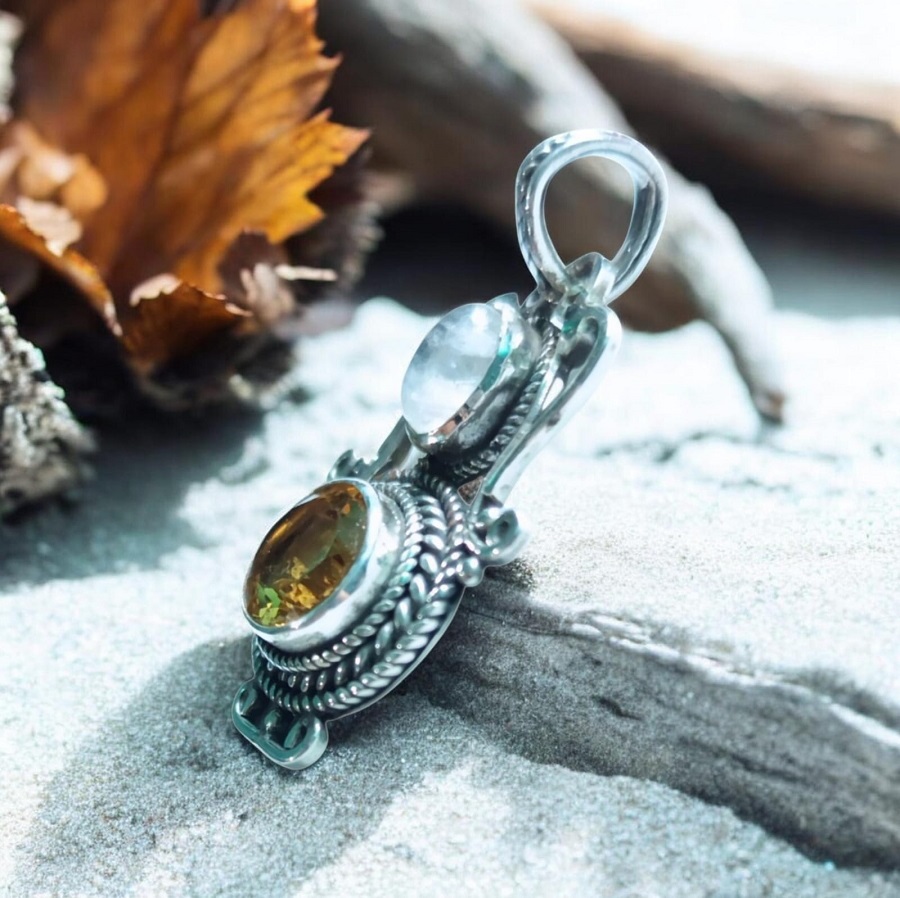
What 36 artisan silver pieces reveal about the direction of Bali-style jewelry
Bali-style silver jewelry has never depended on polished metal alone. Its character comes from the evidence of the hand: a dotted surface, a carved line, a darkened recess, an irregular organic form. Even when a piece is refined enough for an international jewelry counter, it still needs to feel made rather than manufactured.
Over four nights of product research, we reviewed 36 pieces from Anna Beck, John Hardy, Tulola, and SARDA. The selection covered rings, cuffs, earrings, necklaces, charms, brooches, and pins. Rather than chasing volume, the research focused on products that could offer useful direction for future development at Puri Lautan Mutiara.
Several ideas appeared again and again. Some are familiar parts of the Bali jewelry vocabulary. Others show how designers are adapting that vocabulary for customers who want pieces that are personal, versatile, and easy to wear.
Texture remains the clearest signature
The strongest pieces did not treat texture as decoration added at the end. Texture was the design.
Anna Beck’s Wisdom Cuff, Wisdom Hoops, and Silver Dotted Removable Pendant use repeated surface details to create rhythm and catch the light. The effect is recognizable from a distance, but it becomes more interesting at close range.
John Hardy approaches texture through chain construction and compact patterned surfaces. The Oval Link Necklace in Sterling Silver gives a familiar link necklace more physical presence, while the Heishi Chain Bracelet with Black Onyx balances dark stone with dense silver detail.
For product development, the lesson is practical: a distinctive surface can carry an entire collection. The same texture can move across a ring, hoop, pendant, cuff, or clasp without making every piece look identical.
Colored stones are moving silver beyond the neutral palette
The research set included turquoise, tanzanite, Swiss blue topaz, peridot, orange citrine, black onyx, purple garnet, blue lace agate, rainbow moonstone, and diamonds. That is a broad palette, but the most convincing combinations did not overwhelm the silver.
Blue and green stones were especially prominent. John Hardy’s Icon Ring with Tanzanite and Diamonds and Heishi Gem Ring with Swiss Blue Topaz bring clear color into compact forms. Anna Beck’s Turquoise Drop Earrings and Flora Turquoise Studs show two different ways to use the same stone: one fluid and elongated, the other small and floral.
SARDA’s Wonderful Counselor Pendant takes a more layered approach by pairing blue lace agate with rainbow moonstone. Its appeal comes from the relationship between the stones, not simply their individual value.
This opens an interesting route for pearl jewelry. Pearls do not have to sit in a purely classic setting. They can be paired with oxidized silver, carved details, asymmetrical structures, or small areas of colored stone. Tulola’s Melati Pearl Double Pin points in that direction by placing a pearl within a more narrative, botanical object.
Traditional references work best when they are transformed
Literal souvenir motifs have a limited audience. The more interesting products translate cultural references into shape, movement, and structure.
Tulola’s research selection was particularly strong in this area. The Canang Small Necklace draws its name from a familiar Balinese offering. The Geometric Saman Medium Studs reference Saman through geometry rather than illustration. The Akar Beringin Ear Climber turns the idea of banyan roots into a piece that follows the ear.
The Puspanjali Ear Climber, Moon Flower Earclimber, and Forgotten Garden Hawa Hoops continue the same approach. Their names provide context, but the forms still need to work for someone who knows nothing about the reference.
That balance matters. A design can carry a story without becoming dependent on a long explanation. The object should attract the customer first; the story should make it more memorable afterward.
Ear climbers, cuffs, and brooches are creating more sculptural silhouettes
Standard hoops and studs remain commercially useful, but some of the freshest shapes in the research came from products that interact with the body in less expected ways.
Ear climbers extend along the ear instead of hanging below it. Cuffs create a wider field for carving and texture. Brooches and double pins allow a piece to sit on clothing, scarves, or bags. Tulola’s Life Under Water Crystal Dangle Brooch and Melati Pearl Double Pin are good examples of jewelry that can move beyond the usual ring-earring-necklace system.
This does not mean every future collection needs a dramatic sculptural object. A few strong silhouettes can give a collection its identity, while smaller studs, charms, and pendants make the idea accessible at lower price points.
Modularity gives customers a reason to return
Several researched products were reversible, removable, engravable, or designed as charms. Anna Beck’s Renewal Two-Tone Necklace and Mini Star Reversible Necklace offer more than one face. The Turquoise Cushion Removable Pendant and Silver Dotted Removable Pendant can become part of a personal combination. The Kindness Multi-Charm Necklace builds variety into the piece from the start.
John Hardy’s Heishi Gem Charm with Orange Citrine and Diamonds follows the same wider movement toward collectible components.
Modularity has commercial value because the first purchase can lead naturally to the next one. A customer may begin with a chain, then add a pearl charm, a carved silver disc, or a colored gemstone. The collection grows with the wearer instead of being completed in a single transaction.
Two-tone jewelry is still useful, but silver should remain visible
Two-tone pieces appeared throughout Anna Beck’s selection, including the Gratitude Medallion Necklace, Hope Studs, and Flora Turquoise Studs.
The best two-tone work does not disguise the silver. It uses warm and cool metal colors to clarify layers, edges, or focal points. For a Bali-style collection, this can help traditional surface work feel lighter and more contemporary. It also gives customers an easier way to mix silver jewelry with pieces they already own.
What this means for future product development
The research suggests several useful directions for Puri Lautan Mutiara:
- Develop one recognizable texture that can be repeated across several categories.
- Treat pearls as part of a sculptural or botanical composition, rather than relying only on classic settings.
- Explore ear climbers, double pins, small cuffs, and compact brooches alongside core commercial shapes.
- Build a modular family of chains, charms, removable pendants, and engravable elements.
- Use Balinese and Indonesian references through proportion, geometry, movement, and construction instead of literal copies.
- Pair silver and pearls with a controlled range of colored stones, especially blue, green, black, and moonlit neutral tones.
- Design one statement piece, then translate its strongest detail into smaller products at accessible price points.
The common thread is not a single motif or stone. It is the relationship between handwork and wearability. Customers still respond to pieces that feel personal and visibly made, but they also want jewelry that fits into daily life, layers easily, and offers room for their own combinations.
Bali’s silver tradition already provides the craft language. The next opportunity is to use that language with sharper editing: fewer decorative ideas in each piece, clearer silhouettes, stronger collection systems, and more ways for pearls to participate in contemporary artisan jewelry.